 PodcastBig Weird Swings with Skyler Gisondo & Austin Abrams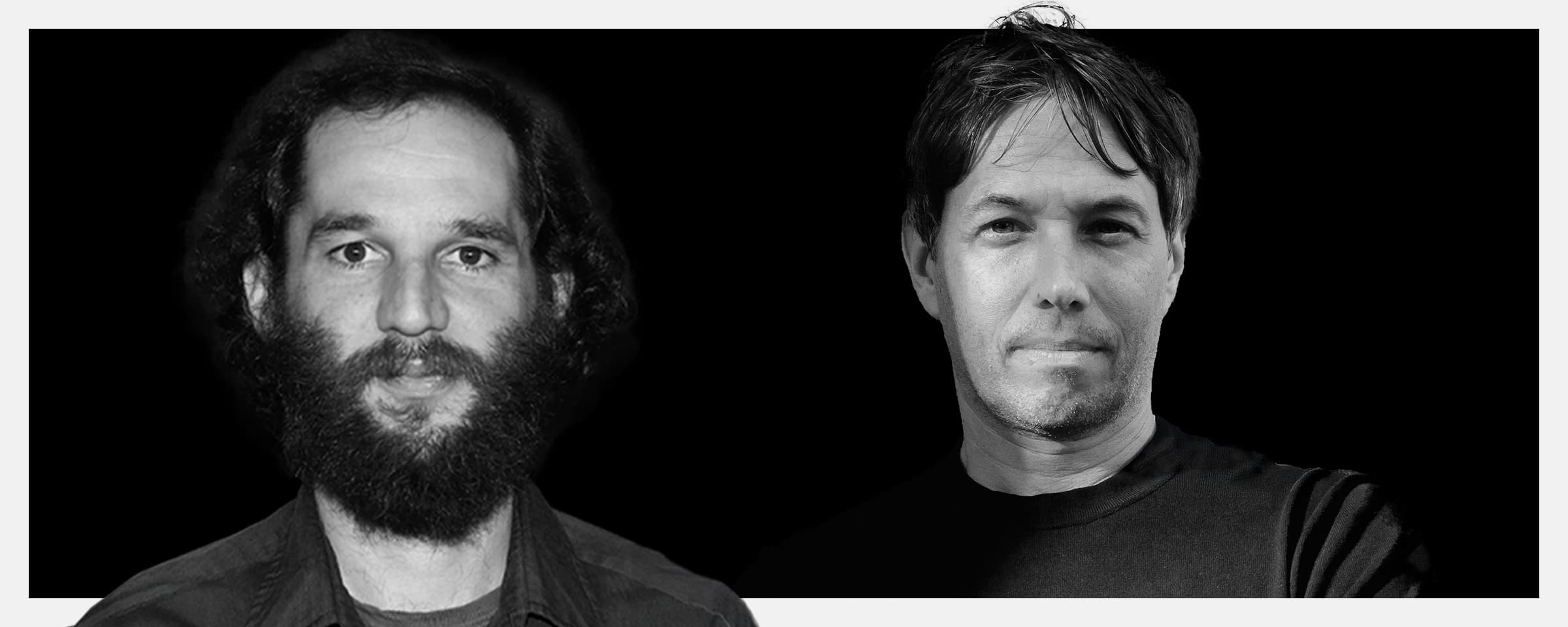
A very special hour with award-winning filmmakers Josh Safdie and Sean Baker discussing their craft, collaborators, and Marty Supreme (which Sean has now seen 3 times in theaters).
Topics covered include: Voice memos as audio documentaries, the difficulty of keeping things small, Sean seeing Marty Supreme three times in theaters, maximalist territory, swimming in bigger lakes, moviemaking as time travel, Jack Fisk set stories, directors’ knee health, Jennifer Venditti’s wildly original casting process, feeling afraid of the script, Sean perfectly timing his edible intake at the Oscars, Darius Khondji as the “Prince of Darkness,” hunting down period accurate Cinemascope lenses, Ronnie Bronstein’s love of Shark Tank, and Marty Supreme’s epic alternate ending.
Josh Safdie: I’m Josh Safdie.
Sean Baker: And I’m Sean Baker. And I’m here to talk to Josh about the wonderful Marty Supreme.
Josh Safdie: On The A24 Podcast.
Sean Baker: It’s great to do this with you, man. I love Marty Supreme so much.
Josh Safdie: Thank you, man.
Sean Baker: Truly. I’m so happy for you, and the whole team. Congrats on all the accolades so far.
Josh Safdie: You know what it means to me when I get your voice memos. Luckily, you saw the movie in person, so I got the real live-
Sean Baker: Yeah. I've seen it three times now, actually.
Josh Safdie: Wow.
Sean Baker: And it keeps revealing new things each time.
Josh Safdie: Well, more than me, my crazy respect for your taste of movies as a filmmaker, you know what that means to me.
Sean Baker: Well, yeah, and I know that we love the same stuff. We have the same sensibility and I think-
Josh Safdie: Most of the time.
Sean Baker: Most of the time. Sometimes. Sometimes we disagree. But yes, it's true, I do leave you very long and annoying audio texts.
Josh Safdie: I love them. It's actually like a little savior. I'll say, "Oh wow, I got a-" and then I'll bring them back. You're the only person I do it with, you know that?
Sean Baker: Oh, that's hilarious.
Josh Safdie: And I like giving you little audio documentaries too when I'm doing it as I'm on the train sometimes.
Sean Baker: Yeah, I hear New York behind you.
Josh Safdie: Yeah. No, you miss it.
Sean Baker: So I want to read a text that you actually texted me back in 2020. I think I was right off of- From what I can tell, this was October of 2020, so I was right off of Red Rocket. I think I was bemoaning something. I think I was talking about how hard it is to keep things small. And we were just talking about the size of crews and-
Josh Safdie: You had just made Red Rocket?
Sean Baker: I think so. And I was a little frustrated with things the way they went, even though I loved the final outcome.
Josh Safdie: Great movie.
Sean Baker: Oh, thank you.
Josh Safdie: Great movie. Simon Rex, unbelievable.
Sean Baker: Another anti-hero like your film.
Josh Safdie: But they're not anti-heroes to you?
Sean Baker: No, but I recognize that people see them as anti-heroes. Do you see Marty as an anti-hero?
Josh Safdie: I mean, I hear people say it. The concept of anti-hero is so negative.
Sean Baker: I know. That's very true. That's very true.
Josh Safdie: They’re heroes, you love them.
Sean Baker: I think they're human with flaws.
Josh Safdie: Yes, exactly.
Sean Baker: Okay, so I'm going to read this to you.
Josh Safdie: Okay.
Sean Baker: So I forgot, I left you an audio text, it vanished, but this is your response.
Josh Safdie: Okay. I wish we had it.
Sean Baker: Again, I think it had something to do with trying to keep under the radar, because our previous film's definitely not Marty Supreme, but I think there were documentary techniques used where we sometimes had to-
Josh Safdie: Contemporary movies, yeah.
Sean Baker: Yes. Yeah, exactly. So anyway, you wrote this. "I think it's fun to swim in bigger lakes. And I think if you use the resources right, the product can be super interesting. I'm falling more and more into maximalist territory." And when you wrote that, I was like, "What the hell is he talking about?" But then five years later, I see Marty Supreme and I know exactly what you're talking about now. This is an epic film. The scope and scale just seems really big, and it's so impressive.
Josh Safdie: I think what I meant about, I definitely, what was the date on that? '21?
Sean Baker: '20.
Josh Safdie: '20. What, like right-
Sean Baker: October 2020.
Josh Safdie: Oh, so the pandemic's still raging.
Sean Baker: Yes, yeah.
Josh Safdie: I had already been working on Marty Supreme. I think what happened was as you... And it's similar to what was happening I think with the direct cinema movement in a strange way, is I started to look at life as a construct and I started to realize, particularly with those movies leading up to that, Heaven Knows What being the most, because it's a documentary essentially. And knowing that life, if you look at life as something that's built, there's millions of decisions that go into it. The higher power, whatever it is, is creating everything like this table, this microphone, the color of the thing, the stand itself, someone's decision to light it this way. It's all there. I think I started to become obsessive about it in particular with Uncut Gems because it was this bigger movie and I was trying to still steal life, recreate life.
So then when you start to break it down, you're like, "Well, how can I create life? And then access the way that I was making those movies?" So how can I create life to have the feeling of going inside of it and stealing the movie because that is the urgency of getting something and getting out. And I think that that was where my head was at. Lakes, I hate lakes. I don't like swimming in lakes in general. I like the ocean, but I don't know. When I talk to you and a few other people, I can open up about that stuff. I don't think I would like send that text to anybody else but you.
Sean Baker: Oh, all right. Okay. I'm honored.
Josh Safdie: Because I texted you this when I was re-watching Prince of Broadway, when you did the restoration, you put it on film, it looks so amazing. It looks so cool, nothing looks like it. You know me, that's one of my favorites of yours, but it's the sneeze. “Bless you, motherfucker.” Because it's amazing because in that moment you're watching two real people, a guy sneezes, that's the most real you can get.
Sean Baker: Right.
Josh Safdie: You know what I mean?
Sean Baker: Right.
Josh Safdie: And the decision for the guy to just remain hard a little bit.
Sean Baker: Oh, yeah.
Josh Safdie: He doesn't want to say “God bless you”, he wants, “Bless you, motherfucker.”
Sean Baker: Yeah, no.
Josh Safdie: And it's one of my favorite moments, but you can only capture, and I love the jump cutting in that movie because normally I don't. And with the jump cutting in that film is really awesome conceptually. It just just works really well.
Sean Baker: And you don't do any jump cutting?
Josh Safdie: Never done a jump cut. No.
Sean Baker: Never?
Josh Safdie: No. I always will cut to something and then even though, what an incredible concept that Godard invented. He was the first person to use it in narrative form, right? In fictional form? He's got to be, with Breathless?
Sean Baker: Really?
Josh Safdie: I think so. I think he was, or maybe popularized it?
Sean Baker: That's a really good question. I don't know.
Josh Safdie: That's a crazy concept. I'm going to do something that implies-
Sean Baker: Right.
Josh Safdie: That there's stuff to cut out and whatever. Anyway.
Sean Baker: And it's something that I... It's fallen a little out of fashion, a little bit. I used it in one moment in Anora when they're outside the strip club because I just rolled-
Josh Safdie: Yes. Okay, I remember.
Sean Baker: ...10 minutes on the two girls talking.
Josh Safdie: In the beginning, no?
Sean Baker: Yes. I rolled 10 minutes, a full mag-
Josh Safdie: Amazing.
Sean Baker: ...on the two of them talking and I was like, "I don't have any other coverage so I'm going to jump cut to the highlights."
Josh Safdie: It's a great way to set up, when you do something like that at the beginning of a movie, you're establishing, you're getting a lot of info out there.
Sean Baker: Yeah.
Josh Safdie: And good will too.
Sean Baker: Yes.
Josh Safdie: And that was also, when I was thinking about that conceptually getting that crazy dolly shot of Marty walking through the Lower East Side, the amount of time and-
Sean Baker: The first one where he's coming? Not when he's running later?
Josh Safdie: No, no, when he's walking. When he's bouncing and there's that kind of, I call it like a slightly Irish vibe of the score. And then he's walking through and walking by people and he's just like, not a worry in his mind five hours late, but all those people-
Sean Baker: Everything feels so alive.
Josh Safdie: I was shooting it like I was stealing it. Of course, we had a crane and a dolly.
Sean Baker: Oh, okay.
Josh Safdie: But the vibe of it, the energy and pushing and directing all those extras, and there's the woman in a white jacket, I went up to her and I was like, "You're not cooking your husband dinner out of protest that night." So she's in her head, my AD team, they're all going and we had this Ken Jacobs film, Orchard Street that had just been restored. His son Aza did it, and that was like a Bible for us so we had this-
Sean Baker: Oh, that's wonderful.
Josh Safdie: We had this real life document-
Sean Baker: Visual reference, yeah.
Josh Safdie: ...of what that street was like. So that was the standard, it was life.
Sean Baker: That's great.
Josh Safdie: But when you do that in the beginning of a movie, you get this crazy production value and you set the stand, time travel and you're like, "Okay, I'm here in this world," the movie can go anywhere because it feels that way. I said to Jack Fisk who designed the movie, I said to him and Adam Willis, the Set Dec, I was like, "I want to time travel because I want to tell the story presently as if I'm there." Because anyone who was around, my great uncle or some other people who were in that scene, they tell the stories. I'm relating to them in present tense. I'm not relating to them in a period, you know what I mean?
Sean Baker: Did you have to... See, I haven't done a period piece. I mean, my period piece was five years ago.
Josh Safdie: Yeah, same way. Uncut Gems was 2012, but it's like you every once in a while you go and it's like, "Oh, we got to paint out that Citi Bank." You know?
Sean Baker: Did you paint a lot of stuff out?
Josh Safdie: That was crazy because I have no relationship with VFX going into the movie outside of the sequence through the colon, or the gem, excuse me. Which was incredible because I had to, when you don't have something to base it on, you have to build it from scratch. So I worked with the same guy, Eran Dinur, who is incredible and he thinks, he wrote a book about... He actually has experience, more like he did all The Wolf of Wall Street effects and things like that, but the way he thinks is he's almost like a physicist. And he plays table tennis and he plays piano and he loves new age electronic music. So he was perfect, and I called him the evil scientist whenever he was around. I was like, "Oh no, what does he want to do? This is going to be evil." And the producer, Katagas would come to me, he's like, "Well, I think we should paint that out over there, we can't afford to cover it." So it was a little bit of that.
Sean Baker: Right.
Josh Safdie: And that's a thankless job for them because it's hard work that you hope no one ever notices.
Sean Baker: You hope no one notices it, yeah.
Josh Safdie: But the table tennis stuff had some visual effects in there as well. The ball basically. But we didn't on that shot in the Orchard shoot, there's no VFX there.
Sean Baker: No?
Josh Safdie: We were covering, there were two buildings that were built in 2015, 2020 that Jack had to build an entire new facade for.
Sean Baker: Oh, okay.
Josh Safdie: You plug them in and then when we did that crazy chase scene, he would reuse pieces and just paint them differently. I mean, he's amazing. And for The Tree of Life, that tree, there's an oak tree that Malick was like, it was spiritual.
Sean Baker: Of course.
Josh Safdie: And they saw it and were like, "We have to bring that tree to location," and the root ball was apparently 25 feet in diameter and the quote, they got the quote to move a tree like that, and for it to survive is even crazier. I was like, "Insane." I think it was half a million dollars to move the tree.
Sean Baker: That's incredible.
Josh Safdie: So Jack was like, "I'm going to find local people." And they slowly dug up the root ball, dusted it out and then put it onto, he found a local guy to put it on flatbeds and they moved it. And his greatest, the thing about it that’s the best, the great triumph of it is that it's still thriving and alive.
Sean Baker: That's nice.
Josh Safdie: But he's like that.
Sean Baker: Yeah.
Josh Safdie: There was like an interview with him where he was chopping down a tree that got something invasive on it and he says to the interviewer, he goes, "I remember planting this tree 50 years ago," and the time and stuff like that.
Sean Baker: Wow. I mean, there's so much texture. There seems to be, you can almost smell everything on, and then also just all the little details, especially in the shoe shop, in the shop.
Josh Safdie: You know when they were excavating that, that was a real... It was on Orchard Street. We wanted to shoot in New York, which everyone's like, "It's too expensive." I was trying to tap into the soul of the city.
Sean Baker: Thank God you did.
Josh Safdie: Yeah, thank you. I mean, I agree. I don't like cheating, you know what I mean? I think it's on some level you're cheating. And I had said to production and Jack that like, "Well, we can get more days if we do this here and do that there. We could cheat this." And I really wanted to shoot where these characters were from. I wanted to shoot it where they lived.
Sean Baker: Right.
Josh Safdie: And there was one shop on Orchard Street that you get lucky with some poorly managed buildings where they never took a deal and they never did this and there's probably family disputes inside of it and you can feel that dispute in this building, and it was just like you walk in, it's like, I don't even know where half of the clothing, where it came from. It's like these, when you see proper, like the Garment District, there are a lot of Garmentos who make clothing, never heard of them, they make them for bigger brands. So you go in there and there's just this slop kind of, Garmento slop, but it's beautiful because it's kind of outsider.
Sean Baker: Right.
Josh Safdie: So you go in there and it's just, you can't even believe what you saw. It's just like underneath it all were the bones of this original, this clothing company and when we excavated, we had to completely clear it out. And we have the scene in the basement where him and, I don't even know if it plays like a basement, when him and Odessa, where his child is conceived.
Sean Baker: Oh, okay.
Josh Safdie: That's in the basement because in the script, it actually is a pretty long tracking shot that brings him from switching the boxes out all the way up.
Sean Baker: Right.
Josh Safdie: And I just condensed it, cut out the travel. But when we had to, because we had to shoot down there. And then we ended up having to recreate the whole basement on a stage because we ran out of time. We had to do that twice.
Sean Baker: Oh, you did some stage stuff?
Josh Safdie: Yeah. The whole tenement. The whole tenement was on a stage. I wanted to shoot that on location because Jack is amazing. I was like, “We have to shoot that on location. I don't want to cheat it.” And then we went and they were like, "Josh, we'd have to rent out every apartment.” Because it's a tenement. There's one way up and down. And so we had to build that. And Jack was like, “Trust me, you will not know when we're there.”
Sean Baker: Incredible.
Josh Safdie: But when we were excavating the basement, he sent a picture of just a decomposed rat carcass. Well, it was just the bones and it was this big. And it was like something you'd see in the Natural History Museum and I tried to preserve it and they were like, “We threw that away.” And then they found a bone that was too big. Looked like a collar.
Sean Baker: Oh no.
Josh Safdie: And I was like, “Guys...” I was like, they didn't send me a picture of that. I was like, “I got to report that.” And they were like, “No, no, we think it was like a dog bone or something.” I was like, “I don't know, man, Lower East Side...”
Sean Baker: Yeah, right?
Josh Safdie: Yeah.
Sean Baker: When you as a director, when you're shooting these scenes that have to time travel the audience, I'm assuming, do you do playback? Do you watch-
Josh Safdie: I say no playback because it's another job on set and I think it's a crutch that people like to sit at. I hate the concept of Video Village. It's just a kind of a cancer on set and everyone... So I never... But there had to be one on this, particularly for the table tennis thing. So we were carrying them and they were great. And I never do playback. I never say let me see that thing.
Sean Baker: But you are watching a monitor?
Josh Safdie: I'm watching a monitor. And I'm like, but I'm like, if the scene is here, I'm like right there. I blew my knees out doing the movie because I would constantly throw myself into these little corners and Ian Kincaid, my gaffer, was like... And Darius too is like, sit next to me on this apple box. I was like, no, no, no, I need to be right there.
Sean Baker: Get knee pads. I did for Anora, actually.
Josh Safdie: I was like, I'm going to look into getting knee pads.
Sean Baker: Yeah. Because in that mansion, all the floors were like marble, hard floors. So you're constantly going down. Knee pads. Knee pads.
Josh Safdie: Did you have knee pads?
Sean Baker: I did yeah. Amazon them.
Josh Safdie: I should have done that.
Sean Baker: So when you're looking at the monitor, is there like a... The suspension of disbelief has to kick in for you as the director, right? Do you feel that happening in the moment? Do you lose yourself and like, "Oh, I'm back and seeing Marty in the 50s right now."
Josh Safdie: Well, what's funny is I took it for granted because I was just there treating it as if it was real. Every once in a while I would say something like Adam and Jack, the way they talk about real life is they won't say that's so ‘52. They would say, "That's so period." They'd be like, "Oh, that's so period." They would show me something. “Look how period this is.” And I don't know if that's like lingo for people who do period pieces, how they speak, but to me it meant it took on a different meaning. It was like this timeless thing in front of us. It has a timeless quality. It has an aura. “Look at that. Look, that's so period.” And the way they said that, I don't know, I always really... It was very spiritual to me. The art department is, especially on a film where you're going back in time and with Miyako, her costuming, it is... I mean, she would go and do crazy thrifting and pulling. And then so her costume department actually had thousands of pieces and she didn't use any of them, but it was more for me and her to go and look, and characters in the movie, Tyler, to just go and look and then you build.
So it's like, “Oh, this piece looks really nice. Let's build a piece like this.” And so all of it is kind of like we're all... And obviously everyone's inspiring each other, but I think Ericksen was the production designer on McCabe & Mrs. Miller.
Sean Baker: Okay.
Josh Safdie: I know he's Jack's hero.
Sean Baker: Mentor.
Josh Safdie: And McCabe & Mrs. Miller, the movie that I know you hate the fake snow in.
Sean Baker: It was probably the first time anyone was doing optical snow and it doesn't exactly hold up.
Josh Safdie: In the beginning, well, when you see these restorations maybe, when you see like an old print-
Sean Baker: 4K restoration, like maybe I wish I'd just-
Josh Safdie: I've never seen the restoration. I've only seen the old DVD and the place.
Sean Baker: Well, it's a wonderful restoration.
Josh Safdie: I'm sure. I mean, I remember reading a story that Warren Beatty, when he saw that movie, Altman was so psyched to show it to him and he was like, "What'd you think? " He goes, "I couldn't fucking hear one word that I said. What did you do to the movie?" And he's like, "Isn't that amazing?" And Warren Beatty is like, "No, it's not amazing at all because it was conceptual." But the production designer would go into town and go to the bars and get the drunks who were there and bring them to the set or the people who built the sets, he'd put them in the scenes. So those, that's why they feel so alive. And I would start to... I went nuts casting a lot of these extras and faces. I would populate and Jack felt like “I built these sets, but they're not alive until Josh you put these people in them.”
And that was when I would start to... That's when the suspension of disbelief really comes alive to me is when I'm like the bowling alley, when you just have all these people that have these anachronistic... Timeless faces, not anachronistic, and they're just in perfect costume with perfect hair. Kay Georgiou, my hair person, I gave her carte blanche. I was like, "If the hair isn't perfect or right, get rid of them." So then the extras people are like, "Hey, Kay is releasing these three extras." Like, good. And I was like, “Send me a picture.” She was right because she was looking at the faces only.
Sean Baker: My God, what you and Jennifer found with Marty Supreme, I mean, every scene is just populated with just incredibly unique looking, beautiful people.
Josh Safdie: Yeah, beautiful people because Jen's like a humanist and I'm lucky, she's a documentarian. Her movie Billy the Kid is a testament to-
Sean Baker: Great film.
Josh Safdie: Amazing movie. That was how I met her. I was playing pool and I was on a roll. I was feeling sharkish. If I can lock in and focus, my problem is just focus sometimes. I believe, when I was a kid, I was like, "If I focus on something, I can do anything." That was in my mind, my dad instilled that into me. So I was playing pool and she came up to me, she tried to cast me. She was doing a lot of unusual casting.
Sean Baker: Oh, is that how you met?
Josh Safdie: Yeah, unusual casting for fashion spreads.
Sean Baker: Oh, okay.
Josh Safdie: And then she, I think the first time she was... And then I think maybe Spike Jonze reached out to her to find the kid in Where the Wild Things Are. She came up to me to be like, "Hey, pays really good money." And I was like, "I don't know. I don't want to do that." Even though I was acting in my early stuff, I was like, "I don't want to do that, it’s just for me. I'm trying to learn for myself. I don't want to do it for someone else."
And so I met her that way and then I went to see Billy the Kid and I cried watching that film and I went up to her and I was like, "What a beautiful movie." So what you're seeing in the film is like, I'm meeting people on the street, I'm sending them to Jen. She's finding people on the street herself. She has a team of people who go into the real world. She's looking at the fabric of SAG and real people and she looks at actors as real people and as you should. And sometimes they're famous and they make a studio happy and sometimes they're someone who's just been working for a long time and no one's giving them kind of their due.
And so she's looking at everyone the same way, but what's happening with some of these first timers, and you can feel it in your movies, is that they... And it's part of the job as a director is instilling a certain sort of confidence and ease, like you have the agency to do whatever you want because whatever you decide to do is great because you're deciding to do it on some level and then you steer them and I don't like the word manipulate, but you push them into areas so that they can do their thing and then... Jen's style is, she'll like do an interview with these people. Again, it doesn't matter if they're a known person or an unknown person, and she'll send the 20-minute interview and her interviews are amazing. They’re like deep dives. Spiritual.
Sean Baker: That's so cool.
Josh Safdie: And then you learn something from them and then you go back and it's like, "Oh, I want to put this piece into the character," so you're rewriting.
Sean Baker: Sometimes you use a piece of their-
Josh Safdie: Oh yeah. And then they see that and they're like, "Wow, you saw something in me." And then she does, I consider it's like acting school. So then in her little windowless room, I'll give a character description and a scenario and I was like, "I want to see how these people improvise." And then she'll work with them and then we'll do it again and then you introduce dialogue and see how they can do it with structured scenes.
Sean Baker: Yes. Because you don't have much improv in this film, right?
Josh Safdie: In this one, no. I mean, I would go... I was so afraid of the script, even though we spent six years on it, I was so afraid of it. It's this thing, you know what I mean? I don't know, do you feel that way?
Sean Baker: I do. Sometimes it just feels like it might be too structured, it might be too... Or I've been living with it too long and it no longer feels fresh and I want to mix it up on set. And so therefore I just say like, "We'll do a couple of takes with what I've written and then if we feel so inspired to take it in another place using this as a launching pad." And that's what I've been doing for the last few films because I've had to flesh out my screenplays to full end screenplays. Whereas the film you mentioned earlier, Prince of Broadway, oh my God, that was like a treatment and us showing up every day and just being like, "Let's see what happens." It's hard to do it on bigger budgets. It's impossible. And also it's impossible to do with what you did, which is a period piece and obviously very structured and-
Josh Safdie: Yeah, I can totally relate. For a long time, I remember I wrote a screenplay and I remember like one group of people who I met through this strange woman and she was like, it was this movie that ended up turning into Daddy Longlegs, but it was a structured script. It was like kind of the same, that morphed into Daddy Longlegs in some way. It was about like the same family going to a beach and whatever, the kid gets lost on the beach and it's a crazy movie. But because I couldn't get that made and I remember I was sitting there in this, like, they were lawyers, the people who were going to give us the money asking for like a hundred grand. And we read, they were like, "We're going to bring in someone who knows the industry." So they brought in like, I don't remember, an actress that I didn't recognize from Footloose. I think she had a small part in Footloose.
Sean Baker: She was one of the feet and the opening credits.
Josh Safdie: Yeah. So I was like... They were like, this is... She's like, "Oh, pleasure to meet you." And then we read the whole script in this conference room and I remember they said, "Well, can you include 9/11 in it somehow?" I was like, "This movie takes place on a beach. What are you talking about? " They're like, "Well, this movie feels very nostalgic and it would be interesting to kind of at least evoke the Twin Towers." And I was like, "But it doesn't take place in 2000 and whatever, 1990s or 2000, but it would be good for us.” And we jokingly pitched the most ridiculous thing and they were like, "That's a great idea." I don’t want to say what it was.
Sean Baker: Sometimes you have to appease.
Josh Safdie: But my point is like I never wanted to... I got afraid of the script and then I just wrote treatments and Daddy Longlegs was just 40 pages of just prose and I was like, "I'll get these kids to, Ronnie to say the words as he wants to say them." There was some dialogue, but it was all ideas. And on this, and I'm sure you... I mean, look, Anora is very structured and I think we've discussed other films and other filmmakers, this feeling of maybe it's, I don't know where, maybe you get really into, I don't know, these realist films that you start to have this kind of thirst for story?
Sean Baker: That's very true.
Josh Safdie: And the story becomes, I don't know, paramount.
Sean Baker: You mean like starting off early in your career, just trying to, I just want to capture-
Josh Safdie: One sentence. Yeah. You have an idea of a movie and you have a very general structure.
Sean Baker: And the goal is more about maybe craft and trying to like recreate reality and then as we've moved on, we actually have been, our stories have been-
Josh Safdie: More complicated.
Sean Baker: ...more complicated, a little more traditional in a way with a middle and an end.
Josh Safdie: Maybe people hate that, but I think they're... I like to see ideas.
Sean Baker: Yeah, we like stories.
Josh Safdie: Yes, we like stories. Yes, 100%.
Sean Baker: The cavemen around the fire, hearing a beginning, middle, and end.
Josh Safdie: Do you tell, or do you orate the story to somebody before you-
Sean Baker: Oh yeah.
Josh Safdie: It's helpful because you know immediately when someone's like, "Where's this going?"
Sean Baker: I mean, I'm about to get into that right now because I have it all here and it's about to be vomited out onto paper.
Josh Safdie: Who do you do that with?
Sean Baker: Samantha and Alex Coco.
Josh Safdie: Amazing.
Sean Baker: My two fellow producers and it's about me going, "Guys, come over, sit down. I'm going to take two edibles and I'm going to just..."
Josh Safdie: I know that about you. I don't know how many people know that about you. Were you on edibles at the Oscars?
Sean Baker: I time it so that-
Josh Safdie: So that you're coming down?
Sean Baker: So that I'm not too high up on stage.
Josh Safdie: It's unbelievable. I can't-
Sean Baker: It's always timed perfectly so that it's really hitting just as I'm exiting-
Josh Safdie: I love that.
Sean Baker: It's always timed perfectly so that it's really hitting just as I'm exiting.
Josh Safdie: I love that. That sounds like such a nightmare for me. I can't do it anymore. When I used to smoke weed, it was a punishment.
Sean Baker: Oh, wow.
Josh Safdie: I would sit, I would do it, I'd be alone. If I have an interaction with someone, “Oh my God, that's bad news.” And I would criticize myself and I'd write them down, these nasty things about myself. And then I would... It was horrible. That's a horrible experience, but I thought that I needed it to understand ideas and myself. And then I'd be sober and I'd come to and I'd read these things. I'm like, "Okay, that's through the lens of this." So I admire that you could... Because these things are... It's amazing that you were able to-
Sean Baker: Well, I think I've become... It was actually something I avoided because I had a bad experience making a student film once.
Josh Safdie: Oh, really?
Sean Baker: Where I was too high and I was like, "I'm never doing that again." And to tell you the truth, I don't. When I'm directing, no way.
Josh Safdie: You have to be lucid, man.
Sean Baker: No, no, no. But I do use it in writing and in post, and I edit high.
Josh Safdie: Wow.
Sean Baker: Maybe that shouldn't be in here.
Josh Safdie: We can delete that.
Sean Baker: 100%. In Anora, I even give in... It was both Red Rocket and Anora that I edited literally 100%. I don't think I edited a scene-
Josh Safdie: Well, keep doing it.
Sean Baker: ...that's not high. And in the end credits, I-
Josh Safdie: You thank the dispensary?
Sean Baker: I thank my dispensary. But anyway.
Josh Safdie: I love that.
Sean Baker: But actually, that brings us to editing. You co-edit with Ronnie?
Josh Safdie: That's right, and it's the first time I've edited since my early films.
Sean Baker: Oh.
Josh Safdie: Yeah, because I'm so involved in the edit. And what I was for a long time, I would just get... I have anxiety, bad anxiety, and the process of editing is anxiety inducing in the sense that, okay, I know this, I want to do this, I know these pieces, and every time I'm in the micro of making the specific cut, I'm fine. It's then when I have them all and I have to... Just having a timeline where you have to move, make a cut and you have to make sure you get all the... I know it's such a simple thing. That just feeling of moving a timeline, it could be just a four-minute scene, gives me so much anxiety that I couldn't do it, so I had to get over that on this-
Sean Baker: And imagine doing that on a Steenbeck.
Josh Safdie: Yeah. Oh my God. You cut probably on that, when you lose one frame and you're in the bin and you're like, "Where's that one frame? I made the wrong cut." So that trains you to be a little bit more orthodox and strict with the cutting, so I have that background a little bit.
Sean Baker: Yeah. That's the greatest thing about the digital revolution, by the way, is what it did for post.
Josh Safdie: Oh my God.
Sean Baker: That's, in my opinion, the greatest thing about digital. So do you and Ronnie, how do you and Ronnie split it up? And are either one of you editing during production?
Josh Safdie: No, no, no.
Sean Baker: No?
Josh Safdie: So no, not even a little bit.
Sean Baker: Okay.
Josh Safdie: So writing is the scariest part because it could go on forever.
Sean Baker: Of course, of course.
Josh Safdie: It could go on forever, and they're the ideas.
Sean Baker: It's the hardest part too.
Josh Safdie: It's the hardest part, 100%. People don't like to really say that, which is not fair to the writers. It's the hardest part. It's the ideas, it's the bedrock, it's the foundation. The actual hardest part is direction, because it's just war and the world doesn't want your movie to exist. And there's a million problems, there's time management, it's performances, so you have to constantly be blind to different parts of yourself so that this dress doesn't exist for this person. And then you're in this space and you're with life all of a sudden, you're doing their takes, but it's finite. It's over in 46 days. It's over. With writing, it could go on forever. Who knows when an idea will come? And in the edit, you have this, it's done. And when we're shooting, I don't have time to watch dailies. I don't have time to watch dailies, let alone edit?
Sean Baker: I know.
Josh Safdie: I had a great editing team who were looking at stuff.
Sean Baker: Just to make sure everything's in focus.
Josh Safdie: Yeah, exactly, which there was a lot of focus problems on this because-
Sean Baker: Oh, we're shooting films.
Josh Safdie: Shooting film with these old lenses, low light scenarios. Darius, “Prince of Darkness”, he's shooting things and I'm no marks, you know what I mean? So I'm letting people, and sometimes he'll be like, "Josh, the actor has to go right here. I've lit for this area." I was like, "We'll see what they do." And he's like, "No, just tell them to go here." I was like, "Can't do that, Darius." Timmy, with some of the more veteran actors, they can do it, but even the veteran actors, you don't put marks down, you're encouraging this freedom. Like you were saying earlier, you have these takes, you do them that are tied to the script, then you go into these unknown territories, these uncharted territories. And you find your way back to the script a little bit, looking for this feeling and you end up using pieces of just improvisation in some way or improvisation emotionally, you know what I mean?
Sean Baker: Yeah.
Josh Safdie: Doing little things, moving different places. But I would say to Darius, "If they don't hit that light pool, and then maybe over here, it's almost more interesting, because there's an imperfection there." And someone might not land in a pool of light. They might be slightly under lit and it would drive Darius crazy, but he started to understand like, okay, yeah, people became not just things you push around. They became these real life things, which is like a documentary in some way. But that's why I'm like, even I remember on Heaven Knows What, I stretched out the credits because I wanted it to look like it was a real production, but at the end of the day, it was like five people making a documentary.
So I try to bring that feeling a little bit to this, but it's going back to the editing, the daily is like, I remember reading these stories about Altman. He did these daily watching parties. I was like, "Wow, how does he have the time to do that?" But it was beautiful because I imagine it would be ... I do that in prep. You get all the crew members, all the department heads together and you watch all the camera tests and things like that. And I'm playing music and I'm creating the vibe, and also the ‘80s music was part of that from the very beginning.
Sean Baker: Really? All of those tracks?
Josh Safdie: It was written into the script, yeah, the drops.
Sean Baker: You can tell because it feels so deliberately cut to the music as well. It seems like you've even storyboarded. I don't know if you storyboarded?
Josh Safdie: Yeah, I storyboarded like 25% of the movie.
Sean Baker: Oh, interesting.
Josh Safdie: Yeah. Because you have to for some of these bigger set pieces, like the stunts people need to know, the effects people need to know. I shot list like crazy for the film, and what's crazy is I ask for statistics at the end of a movie from the camera department so I know my own stats and can be like, "How many takes do I do? How much film do I shoot?"
Sean Baker: On the setups too?
Josh Safdie: On the setups too.
Sean Baker: Like how much do I shoot on the wide? How much do I shoot on my closeups?
Josh Safdie: Oh, yeah.
Sean Baker: Oh, cool.
Josh Safdie: I usually shoot the wides after all the closeups, which drives the gaffers and all them crazy because the wide is always lit differently. Normally, you go in. I like to establish what they're doing on closeup and then you move out. Do you do that?
Sean Baker: I mix it up. It really depends on the scene, and sometimes I start with the principles.
Josh Safdie: Yeah, it’s not a science.
Sean Baker: Yeah. I try not to actually stick to the same thing every time.
Josh Safdie: It's interesting though because people don't realize that the order of which you're shooting a scene is for the actors.
Sean Baker: Yes.
Josh Safdie: You know what I mean? It's the beginning of the direction. We're going to start here and then we're going to go there, and that's why if you let an AD decide what you're doing, we're going to do this first, do that first, all of a sudden, you're just being... This is all due respect to the AD department, but that's not their job.
Sean Baker: Right.
Josh Safdie: You know what I mean? And you're right. So it is tailored to each scene and to performers. And then you have like who do you... Like when you-
Sean Baker: Known actors sometimes.
Josh Safdie: Yeah, like who wants to get shot first and things like that, so you have to play that game.
Sean Baker: Yeah. And sometimes something happens and you have to go back.
Josh Safdie: Oh, yeah.
Sean Baker: And if you don't ... Oh, there have been a few times where I'm just like, “Why didn't I just spin the camera and take that extra 20 minutes and shoot additional coverage?”
Josh Safdie: Well, I'll bring in a second camera for that.
Sean Baker: Oh, okay. So you-
Josh Safdie: I'll just bring a second camera in.
Sean Baker: Okay. So you had multiple cameras shooting and-
Josh Safdie: Yeah.
Sean Baker: Okay.
Josh Safdie: And I would have that for allowing the director, the actors. For example, the scene between Kevin and Timmy, the Paris scene, that was the second day of shooting and I really didn't want to do that. It was a huge scene in the middle of the movie. Unfortunately, it has lots of narrative information in it and those are the hardest scenes to shoot, just from a directing standpoint, because they have to say information that's important to the movie and you feel bogged down by that sometimes. But I had two cameras at once, and that drives Darius crazy. And I never tried to do that where you're doing this.
Sean Baker: Yes.
Josh Safdie: I told Darius, "I'll never do it if the shots are compromised and the subjectivity is not there." We were able to frame it up, use long enough lenses and things like that, which I like anyway.
Sean Baker: So it's like 75 or-
Josh Safdie: 360.
Sean Baker: 360?
Josh Safdie: Yeah. You're far away.
Sean Baker: Wait, what scene was the 360?
Josh Safdie: I've used 360 a lot. That's like the most beautiful jewel, C Series Panavision lens. You know what? I discovered that lens because it was used on Rosi's The Moment of Truth, the bullfighting, beautiful bullfighting, which was a hybrid film as well. On the bull stuff, he used the 360, but it was I think spherical. No, I think it was-
Sean Baker: Wow, and he was holding wonderful focus on all that stuff.
Josh Safdie: Oh my God. I mean, you have daylight so it was probably a pretty high... It was probably F16 or whatever, 11.
Sean Baker: And you didn't do much handheld in this film?
Josh Safdie: Every time we were in the tenement, every time, it was handheld.
Sean Baker: Oh, okay.
Josh Safdie: That was like a rule.
Sean Baker: It was actually a really steady handheld.
Josh Safdie: Yes. Well, Colin Anderson, my camera operator who does all of PTA's films and a lot of Bob Richardson movies, he's like a human stick. I mean, he's the greatest steady cam operator ever. He's like a dolly. It's unbelievable, and I had a lot of steady cam in this and I told him, I begged him. I begged him to do the movie, and he... Amazing. Your operator becomes... That's your eyes. You know what I mean? And Darius operated once or twice on the film, but he's more of a lighting cameraman. Darius is expressing himself through light in a very poetic way and was doing period lighting in a way, like the color temperatures and whatnot.
Sean Baker: Probably a lot of tungsten?
Josh Safdie: Yes. They brought a lot of tungsten, modern day lighting.
Sean Baker: There's a difference. There's definitely a difference.
Josh Safdie: Yeah. Modern day lighting. They would pull in those sky panels or something?
Sean Baker: Right, yeah.
Josh Safdie: They would use those and they would key in. They would use more kelvin as their reference. Ian would test the kelvin of a period light and then try to match it on these sky panels and stuff.
Sean Baker: It's just gorgeous. It really is.
Josh Safdie: It's amazing.
Sean Baker: And you told me that maybe there were some lenses that were actually created for the design?
Josh Safdie: Rehoused.
Sean Baker: Rehoused.
Josh Safdie: My wife was a producer on the movie. There's a movie that's not very good called, I think it's called Woman's World, and it was one of the first anamorphic pictures made.
Sean Baker: Really? Oh, okay.
Josh Safdie: There's The Rope? The Rope, not Rope.
Sean Baker: Right.
Josh Safdie: And there was this film. Woman's World I'm pretty sure it was called and Lauren Bacall is in it, and beautiful in it, and it's not a great movie, but there's anamorphic footage. She found it because we were looking for footage of, anamorphic footage in particular, of New York City in the time period. Because in the beginning, I was thinking I was going to mix real footage in with the film, and she found this movie that was one year after our period and it was all shot in New York, so I was like, "I want the dailies." So we went, and the studio, Fox, kept all that, so we found the dailies. Because I wanted to do this driving shot where I wanted to create a projection of the real city using anamorphic footage.
And again, that's conceptually cool, but we didn't end up doing it, but what I saw was, I was like, "What are these lenses?" They're period lenses with anamorphics. So Fox bought Bausch & Lomb and created these lenses called Cinemascopes, and there are two sets in the world, and we found TCS in New York. Do you know Oliver and TCS in New York?
Sean Baker: I do.
Josh Safdie: Yeah, he's amazing, and he's a lens hunter. He helped me find this NASA Vivitar lens that opened up to 0.8. Amazing. I had it on set. It's spherical.
Sean Baker: Yeah.
Josh Safdie: And it's cool.
Sean Baker: So I was going to say that these old lenses probably didn't open up past 4?
Josh Safdie: I think Kubrick had one for Barry Lyndon, or something like that, but they're NASA. They're designed for outer space with no light. So I found them with Oliver. They were I think in Sweden, but they were old, so he rehoused them and we brought them, we started testing them, and they were beasts. They were this big and they weighed like 80 pounds, and we used them a little bit. They had a lot of technical problems so we didn't use them very much, but they're in the movie here and there. There was a lot of stuff on Orchard Street that we cut that was all shot exclusively with them.
Sean Baker: And it seems like you always have a loose head on the... You're locked down.
Josh Safdie: Yes.
Sean Baker: You're on sticks.
Josh Safdie: Always loose.
Sean Baker: But it's always loose.
Josh Safdie: Absolutely. I always tell them, "Do not ever lock that off," every once in a while, because I just want to be able to be where the camera could go and give Timmy the freedom, give all the actors the freedom. Sometimes they go off the set.
Sean Baker: But it keeps it alive without going full handheld. It keeps it alive. There's an energy there.
Josh Safdie: But the rule definitely was every time we were in the tenement, we were handheld.
Sean Baker: Oh, that's so interesting. How did Kevin O'Leary come into the project?
Josh Safdie: So Ronnie and I wrote this character.
Sean Baker: Because he's great. I love him by the way.
Josh Safdie: He's amazing. He's a corporate colonialist or the first of its kind, post-war carpetbagger, eternal power. You know what I mean? Scary, timeless power that's been around for as long as capitalism has been around. So I was looking at actors. I met with a few. They just were never going to bring what was needed. Again, I'm chasing life, and... So then, I went back to the drawing board and I pulled up Forbes top like 50 richest people in the world, and I just went through each one.
Sean Baker: Typecast.
Josh Safdie: And then, you watch interviews with them and they don't have it, they're not cinematic, they're not great looking, some of them. And then, I was like, okay, let me think of entertaining businessmen, and there's a lot of them. And I started going through, and naturally, I got to the great American Dream show, Shark Tank. And Ronnie and I were talking a lot about this character as we wrote it, so I called Ronnie and I was like, "What about Shark Tank, Cuban?" He goes, "Mr. Wonderful." I was like, "Oh my god, yes, Mr. Wonderful." He goes, "That's the only guy we can use off that show, because he is an asshole." He's a known asshole. He anchors the show. And I've watched a lot of Shark Tank, Ronnie's watched probably every episode of Shark Tank. He'll hit me up and be like, "You've got to watch this one." But I love the show. What I like is I like the portraiture of the people who come on. I love business. I like watching people make deals and looking up what the businesses go on to do.
So I met with him, and these people, they have a lot of money, there's no reason, hell he's going to lose money making this, there's no reason for him to do it. So I went onto a Zoom with him and I had to pitch him, and it was frightening because I was on Shark Tank.
Sean Baker: You were basically doing Shark Tank.
Josh Safdie: I was on Shark Tank. He said something about Uncut Gems that was illuminating, because he looks at life like a product, and he saw that... He's an artist though, he started off as an artist. He edits his own material. He has beautiful cameras that he likes, he loves lenses. He plays the guitar. Very unique, interesting person and unique point of view on life. And I just knew the second I was talking to him, I said to Ronnie, he agreed, he was like, "I really like this. What's next?" Immediately. I was like, "Well, next is we meet and we go through the script and we honor-
Sean Baker: What did he have to say about Uncut Gems?
Josh Safdie: He said, "Things don't exist for everybody, and you had a thing." Basically, there was a thing there. He was speaking, and the way he used the word thing was conceptual, and I was like, "Oh, wow."
Sean Baker: So he was talking about the value of the...
Josh Safdie: Yeah. Not just the fact that... Obviously, it connected with audiences, so maybe he's talking about that on a pure business level. But he was also talking about, from conceptually, it was just this thing, it was a complete product, without being cruel about it, and he loved it and he loved how dark it was. He wishes Marty Supreme was much darker. He wanted a fucked up ending for the movie. He kept pushing it. He wanted Rachel to die.
Sean Baker: Oh no.
Josh Safdie: And I was like, "What's wrong with you? This is why you are who you are, man. What's wrong with you? This is wrong." Something is wrong with him.
Sean Baker: Well, he probably wanted to... He liked Uncut Gems, he wanted to see that happen again.
Josh Safdie: Yeah. He just wanted Marty... He was so the character, he didn't like that he lost the duel and he wanted Marty to suffer. So then, I was like, "Next step is we meet, we go through the scenes. I want to hear your voice, I want to adapt it, see if it works.” And he was like, "Well, I'm not coming to New York.” I was like, "Well, I don't want to do this over Zoom." He was like, "I'll fly you. I'll fly you and Ronnie to wherever I am."
Sean Baker: That's gold.
Josh Safdie: So he put us on a tiny little plane, which was frightening. And then, we went and we met with him over the course of a day. He had the script in his living room, and he had some house guest who had read it twice already, who was probably a businessman or something, and that guy loved it, and Kevin loved the script. And then, when I met with him, he came up with that vampire line. He came up with it, because we were meeting with him and we were trying to figure out how would Kevin O'Leary react to this kid saying to him that money doesn’t matter to him, there are other things that are more important, this is fate in front of him. And he goes, “I would never do anything that could ever implicate me in any other way, so I would use the dark arts.” And I was like, “Oh man, like how?” And he just said, “I would look to him and I’d say, “Marty, I was born in 1601, I'm a vampire.” I look at Ronnie and we’re like, “Oh my god. What a line. What a line.”
Sean Baker: Yeah. I’ve been seeing stuff online, and people have been seeing this film as a vampire film. I don’t know if that was...
Josh Safdie: We had an idea at one point, which kind of speaks to the music in the film, the music in the movie is this built-in feeling of, first of all, the timelessness of it, what anachronism does, the past hunting the future, the future hunting the past, hauntology. But the movie, originally, you saw his life go past, from having the baby all the way up to '87 at a Tears for Fears concert where he’s with his granddaughter watching-
Sean Baker: Oh, okay. So that was the end in the original draft, the first draft?
Josh Safdie: Yeah, yeah. And you saw everything, you saw him-
Sean Baker: So that's where the ‘80s music came from?
Josh Safdie: Yeah. I actually had the idea before I had that idea. The idea from the very beginning I saw, I wanted to see what this world looked like in 1949. I was listening to Peter Gabriel's “I Have the Touch”, “The time I like is the rush hour, ‘cause I like the rush. The pushing of the people, I like it all so much.” And it just felt right. And I was also kind of allergic to the feeling of a period piece, the nostalgia of it.
Sean Baker: So you wanted to contaminate it a little bit?
Josh Safdie: Yeah, exactly. And also, the ‘80s were a very interesting time, the beginning of Postmodernism, they were revisiting the opulence and prosperity of the ‘50s. The culture was, Back to the Future. It was literally the ‘80s going back to the ‘50s.
Sean Baker: Oh, you're right, you're right.
Josh Safdie: So that was where it started. And then, you start building to it, and I'm like, "Oh, this could tie it all together." But you saw him, I can’t believe I’m saying this, you would see him go through, he comes in, as you imagine, he's an amazing salesman. He turns that shop into the most successful shop on Orchard Street. He changes it to Marty Mauser's Shoes, franchises, franchises again, leaves New York State, becomes a very rich man. All the metrics of success are there. His family grows, he leaves the city, has this beautiful house, and it ends with him at a concert for Tears for Fears with his granddaughter. They're great seats, up front, and he's watching it , and he's thinking about “Everybody Wants to Rule the World” and youth and what does it mean, and he has this success, but he's not doing the thing that he believed he was born on the planet to do. He has all this great stuff around, he has these great things around him.
Sean Baker: Interesting.
Josh Safdie: You’re on his eyes, we built the prosthetics for Timmy and everything, and Mr. Wonderful shows up behind him and takes a bite out of his neck, and that was the last image.
Sean Baker: Oh my God.
Josh Safdie: And he hasn't aged.
Sean Baker: Wow, okay.
Josh Safdie: And I remember A24 and everyone were like, "This is a mistake, right?"
Sean Baker: Yeah. Oh my God.
Josh Safdie: You might think it is.
Sean Baker: You're trolling us. No, I like that idea a lot, but I'm obviously very happy with what you did.
Josh Safdie: No, no, no. Yes, yeah.
Sean Baker: And I love the structure now of conception, birth.
Josh Safdie: Birth.
Sean Baker: And I don't think I've seen that before, which is crazy.
Josh Safdie: Yeah, I know. I feel like I've seen it before, but maybe not.
Sean Baker: Yeah. And one last thing, Odessa, she is incredible, like really great.
Josh Safdie: She's really special.
Sean Baker: In the beginning, rewatching, I've seen the film three times, so the second and third time, I'm just really appreciating that opening scene, because I didn't pick up on how blatantly they're lying and pretending not to know each other, but it's so obvious in the second and third viewing.
Josh Safdie: That was her first... As you know, obviously, when you schedule a movie, you want the first scene that they shoot to have importance. With Gwyneth, the first thing we shot with her was her return to the stage. With Odessa, she was doing a horror film, so the first thing we were going to do was her first scene in the movie. And I was really, I kept saying, "I don't believe it, I don't believe it, I don't buy it. The hustle's not working, the hustle's not working." And I was like, "The scene is not you doing the hustle, the scene is you forgot your shoes, and the scene is you want to look at them and you want to find these shoes." So once she realized, like, "Oh, that's the scene. The scene isn't me playing, the scene is this," then she locked in and she was so good.
Sean Baker: That's so funny.
Josh Safdie: And my metric was all the extras, because there's all these people I put into the scene, real people I know, this guy, Mordechai Rubinstein, this guy, Morty, who's obsessed with fashion, he knows ‘40s/’50s fashion, so he was a great salesman. He is a great salesman, he's selling shoes. All these people are in the thing, the store is super alive, screwed me a little bit with sound. And I would ask Morty, I was like, "What do you think's going on in the scene?" He goes, "It's the beginning of a romance." I was like, "Perfect." Once you heard that, you're like, "Oh, it's working." So none of the extras had any idea really that they knew each other, so that was the barometer, is did they buy it, so I'm happy that that-
Sean Baker: Yeah. And then, when he returns eight months later and he sees her, and they have that moment where he's saying-
Josh Safdie: “Does Ira pull out?”
Sean Baker: ...“Does Ira pull out?” And she goes, "You really want me to answer that question?" And starts to tear up. That was the moment where I'm just like, "Odessa's a star, she's a star."
Josh Safdie: Yeah, she's amazing, yeah. She was so prepared and so great. Jen was, the second she read it, she was like, "This is the actor."
Sean Baker: Yeah. I'm so happy for her. Your entire ensemble cast, you can't have a weak link, you don't have a weak link.
Josh Safdie: No. One person ruins a movie.
Sean Baker: No, no. Yes, that's very true, that's very true. Okay. Well, is there anything else-
Josh Safdie: Honestly, Sean, I wish I could ask you more questions. I know this was structured as talking about my movie, but-
Sean Baker: No, no, we're talking about Marty Supreme and...
Josh Safdie: Yeah. But I love you and love all of your work, and I feel kinship.
Sean Baker: Oh, well, thanks, man. Yes, most definitely, most definitely.
Josh Safdie: So that's why, when you responded to this movie... I believe this is a small film. My producer came up to me, he goes, "You're making like a $50,000 movie." And I said, "Wow, really?" He goes, "Yeah." And I was like, "I'm trying to steal this movie." So that's why, when you saw it, I'm happy that that resonated with you. I hope you make a period film to see how you do it.
Sean Baker: Yeah. I wonder how far I'll go back. I don't know if I will go to the ‘50s. Maybe the ‘80s.
Josh Safdie: The research part is hard.
Sean Baker: Maybe the ‘80s.
Josh Safdie: The research part is hard, so you could go back to the ‘80s.
Sean Baker: Yeah, yes, yeah, because I lived that. But I just find Marty Supreme to be so inspiring, because again, I see all of your trademarks, I see your signature all over it, but it's so different from your other stuff in terms of what you... It's so structured, it's so controlled. But you have all that energy, all the spontaneity, everything that makes it just feel like you're capturing real life. But I know you didn't capture it for... Every moment of this had to be calculated, so I find that so impressive.
Josh Safdie: Thank you.
Sean Baker: And I just want to really commend you and your entire team on it.
Josh Safdie: That means a lot from you.
Sean Baker: Yeah, yeah. Awesome, man.
Josh Safdie: Thank you, Sean.
Sean Baker: Good luck with everything.
PodcastBig Weird Swings with Skyler Gisondo & Austin Abrams