 PodcastBig Weird Swings with Skyler Gisondo & Austin Abrams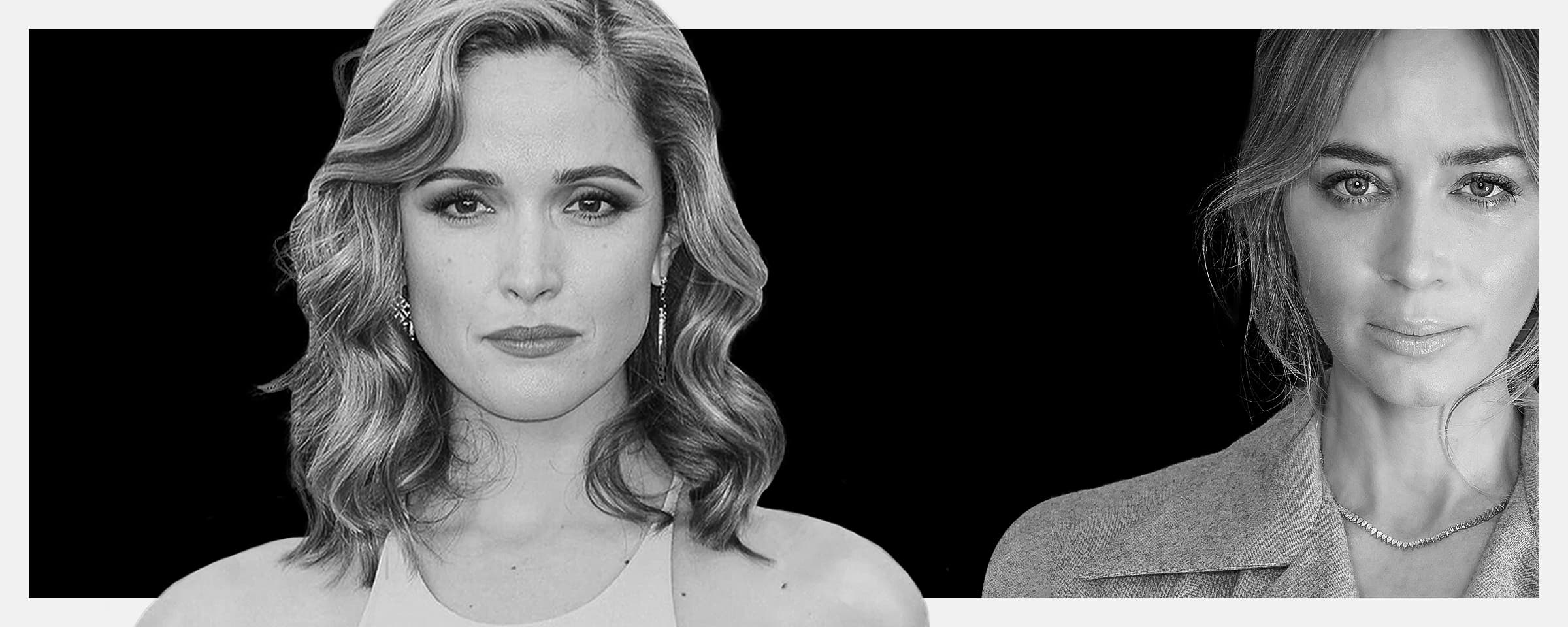
A certified lovefest between Rose Byrne and Emily Blunt as they go deep into their Golden Globe-nominated performances for If I Had Legs I’d Kick You and The Smashing Machine.
Topics covered include: Car rides to and from set, Emily’s special nickname for Dwayne Johnson, performing with a camera inches from your face, delicately handling playing a real person, Wonderbras, The Rock as the most patient man on Earth, not being concerned with being likable, Mary Bronstein’s intimate rehearsal process, audiences inherent distrust of a woman misbehaving, Emily reconnecting Dwayne and Benny on set of Oppenheimer, wanting to feel terror when choosing projects, and being hyper aware of the ocean.
Emily Blunt: So I am Emily Blunt. What's your name?
Rose Byrne: I'm Rose Byrne.
Emily Blunt: We're going to chat about our films.
Rose Byrne: We are here to talk about A24 films.
Emily Blunt: On the A24 Podcast.
Rose Byrne: Yes, yes.
Emily Blunt: Can I just start by saying I wanted to scream directly into the pillow with you? Watching you in this very slow-paced nervous breakdown, which is one of the most painful types of nervous breakdowns to encounter, that it doesn't happen all at once. It creeps in on you insidiously. And it was just extraordinary. You were so wild.
Rose Byrne: Oh.
Emily Blunt: So unhinged, so broken. It had such a lasting effect on me. It spoke to me on so many levels about maternal pressure and all the symbolism of the cord, representing the umbilical cord. It was just beautiful.
Rose Byrne: Aw.
Emily Blunt: You were un
Rose Byrne: Gosh.
Emily Blunt: ...freaking real.
Rose Byrne: That is so kind and sweet. Oh, my gosh. I feel like this is going to turn into a festival of lovingness.
Emily Blunt: It's going to be such a lovefest.
Rose Byrne: I loved The Smashing Machine.
Emily Blunt: Thank you.
Rose Byrne: I thought you guys were extraordinary. And the movie was so not what I had expected. It was very intimate and it was very quiet in so many ways.
Emily Blunt: Yeah.
Rose Byrne: And then, obviously dispersed with the violence of what he's doing. And then the violence of the relationship, like the emotional violence of the relationship.
Emily Blunt: Yeah. But it is kind of a surprising movie. They think it's going to be a fight movie, and it's so fragile in many ways. You know?
Rose Byrne: Exactly. It's so delicate. And you guys have extraordinary chemistry. Emily Blunt: Oh, thank you.
Rose Byrne: And I know you have a working relationship with
Emily Blunt: With The Rock.
Rose Byrne: You call him that?
Emily Blunt: We can call him Dwayne.
Rose Byrne: Okay. I'm going to follow your lead.
Emily Blunt: Does it feel strange to call him Dwayne?
Rose Byrne: I'm going to follow your lead.
Emily Blunt: He gets called DJ.
Rose Byrne: Okay.
Emily Blunt: I like to call him Toots just to really, really emasculate him.
Rose Byrne: Are you the only person who can call him that, or...
Emily Blunt: Well, my whole team calls him that now. And I've also encouraged people on his team to call him that as well. So it's now just stuck, emblazoned.
Rose Byrne: This is the insight that I needed to get.
Emily Blunt: This is why we have great chemistry.
Rose Byrne: Yeah. Right.
Emily Blunt: Yeah. You got to just undercut all that The Rock.
Rose Byrne: Wow. That's extraordinary. Anyway, and I'm such a fan of Benny Safdie. Emily Blunt: I know.
Rose Byrne: And his work. And so anyway, I have a million questions and I'm very intrigued Emily Blunt: Okay.
Rose Byrne: ...by the process you guys did.
Emily Blunt: What should we start with?
Rose Byrne: What should we start with?
Emily Blunt: I have one question to ask you, which is a question that I thought about when I watched the
film, seeing what you put yourself through in such a high octane sense. What was your car ride to work like, and what was your car ride back from work like?
Rose Byrne: My adrenaline was super high doing it. So I was just always on the brink, like a little bit. Maybe only later did I realize. You don't know when you're in it.
Emily Blunt: Yeah.
Rose Byrne: You know? You're just doing it, and you're in it, and you are... I'm not wanting to mess it up. And we had a good rehearsal period, which was lucky. So I felt like we'd had all the conversations. You know?
Emily Blunt: Yes.
Rose Byrne: We had a million conversations.
Emily Blunt: Yes.
Rose Byrne: And some car rides home, I'm pretty hard on myself. I'm like, "I didn't do this. I felt I should've done that." You know? You go through the reel in your head and we had
Emily Blunt: I do that three months after I'm done with something.
Rose Byrne: Oh, fascinating.
Emily Blunt: I'll be driving, and I'll go, "That's how you should've played it."
Rose Byrne: Yeah.
Emily Blunt: It'll hit me.
Rose Byrne: Yeah.
Emily Blunt: That's okay though. Maybe it's good to keep investigating what we could've improved upon. Rose Byrne: Is it?
Emily Blunt: But do you torture yourself or are you like, "Hmm."? Or is it like, real self-flagellation? Rose Byrne: This one was tough. This one was me constantly... You know?
Emily Blunt: But you're so exposed in it. I mean, it is literally... Did you know how much your extraordinary face was the window into the soul of the movie? Did you feel it when you were shooting it? Did it feel like the camera was in your face all the time?
Rose Byrne: I did.
Emily Blunt: Yeah.
Rose Byrne: Because on the first day, the camera got closer and closer, and then until it was here. There was no zoom lenses, so it literally was that close. And then I could hear that it was a 35, so I could hear it going.
Emily Blunt: Yeah.
Rose Byrne: You know?
Emily Blunt: Yeah.
Rose Byrne: So it's that whole thing of being hyper aware. I said to Mary, "Oh, you're going to get that close? Is that how close you're going to get?" And she was like, "Mm-hmm." Mary Bronstein, the writer/director. And then once I knew, you go, "Okay."
Emily Blunt: Surrender.
Rose Byrne: That's what we're doing. And it was just pushing myself to the limit of this technical performance, right?
Emily Blunt: Yes.
Rose Byrne: Of what we do with the camera and what they would need. And more importantly, what they didn't need.
Emily Blunt: Yeah.
Rose Byrne: You know when it's that close, because often it would just be her eyeball but.
Emily Blunt: But it was so subtle what you did. I mean, truly the stress I felt watching you was rather unparallel to anything I've seen before, and the impact it had on me, and it was lasting. It was lasting afterwards. I'm still thinking about it, about the pressure. I think The Smashing Machine explores pressure as well. You know it's sort of an interesting thing to be in a movie that explores it on such an unrelenting level.
Rose Byrne: Yep.
Emily Blunt: And it's such a window into the inadequacies maybe we all feel as mothers a lot of the time. And it was painful watching you go through it because it's such a mirror. It's such an amplified version of probably what we all feel like when we're on the last rung on the ladder for keeping it together. And you have to be calm and the together one when you're deeply white knuckling it most of the time.
Rose Byrne: Absolutely. Yeah, it's that
Emily Blunt: Did you feel playing her that you related to her?
Rose Byrne: I felt like I was sort of intrigued by... This situation she's in is so specific, right? And most mothers or fathers, for that matter, won't go through it, right?
Emily Blunt: Yeah.
Rose Byrne: To have this very specific horrible illness that's happening.
Emily Blunt: And such an intense connection they have.
Rose Byrne: You know? 99% of parents won't go through this. But I was sort of obsessed with like, "Why is she reacting like this?" Everyone's going to react differently in a crisis.
Emily Blunt: Sure.
Rose Byrne: Why is she doing this? What is it about this person that is crumbling under this right now? And not to say that I wouldn't crumble or whoever wouldn't crumble, but why is she responding exactly like this? What happened before? Who was she before?
Emily Blunt: Yes, I wondered that too. I was like, "What's the shadow of her life?" And therefore, is this that line between high stress and mental illness, and it exposes that and explores it. And it did make me wonder like, "Who was she before she had a kid with this terrible condition?
Rose Byrne: Totally. That's the question we ask, right? Like, "What happened to this person before?" Emily Blunt: Yeah.
Rose Byrne: And it's the homework, and you don't want to see the homework.
Emily Blunt: Sure.
Rose Byrne: You know? You just want it to feel lived in, but
Emily Blunt: But she was so lived in. So lived in. It was really, really visceral.
Rose Byrne: Well, I felt the same for you guys. I was intrigued. Did you guys rehearse? What's Benny's process? What's Dwayne's process?
Emily Blunt: Sure.
Rose Byrne: You know what the...
Emily Blunt: I mean, Benny is so wonderfully collaborative. And he's known for these, you know? His movies have this unrelenting, at times, suffocating energy, but based in being terribly human. And Benny's got such beautiful humanity to him that he's so interested in people's brokenness. You know? And we shared our souls with each other in the few weeks we had leading up, and endless conversations on the phone, voice notes back and forth to each other. So we were so intertwined by the time we started, partly because I think we all felt we had to do our homework with the real people we were playing.
Rose Byrne: Of course. Yeah.
Emily Blunt: And we all spoke to
Rose Byrne: And they're no longer together, right?
Emily Blunt: They're no longer together, but they are good.
Rose Byrne: And they share a child. Yeah.
Emily Blunt: They share this beautiful child together, and they've done an amazing job co-parenting him. But that relationship is so volcanic and so... It broke my heart in speaking to them because I think they really did strive for a happy medium, but they both struggled with so many demons that they could never find it.
And they were addicted to chaos, hazard. Their love language was that kind of passion and they had an addiction to that codependency. You know?
Rose Byrne: Yeah. Yeah, yeah, yeah.
Emily Blunt: She was codependent. He was controlling. It was just such a recipe for disaster when they couldn't live with each other, couldn't live without each other.
Rose Byrne: And did that really happen? Did she had an attempt to
Emily Blunt: It did.
Rose Byrne: Wow.
Emily Blunt: And I talked to her about it. You know?
Rose Byrne: Yeah.
Emily Blunt: She was nervous to talk to me at first because there was a documentary that the movie was based on. And I think the film didn't really reveal the full spectrum of Dawn's story. I think it focused on Mark. And I think she was villainized a little bit as the creator of his undoing. And I think anyone who's had an addiction will own it and say, "That's not true. It is on me." And so, she was so nervous about the movie. And when I first started speaking to her, I could see that I needed to really advocate for her in the film. And I said, "I know I'm playing you during this incredibly volatile time in your life." And I would hate it if someone made a movie about one of the more tumultuous times in mine. But I said, "I'm going to advocate for you. I will take care of you." And I said, "So if you tell me the full weather system of your story, I'll make sure it's in the movie."
Rose Byrne: Wow.
Emily Blunt: And one of the first things she said was like, "I know that it's not for the faint of heart and it's not everyone's love story, but it was mine."
Rose Byrne: Yeah. Wow.
Emily Blunt: And it killed me. I was like, "Oh." It just moved me.
Rose Byrne: That is very brave.
Emily Blunt: And it is. And I'd never had this gift before. I don't know if you've had this experience where you're playing someone who's alive and you get to absorb them. Normally you're building it from this ground up.
Rose Byrne: Yes. Sure. Yeah, yeah, yeah.
Emily Blunt: Your invention of someone.
Rose Byrne: Yeah.
Emily Blunt: But to have the person where I get to ask her, "Tell me about your childhood. Tell me about your relationship with your mother. What were you marinated in? Why are you this way?" It was
unbelievable. It was such a gift. Have you ever had that where you've played someone who's still with us?
Rose Byrne: I did a film that has not come out yet called Tow. And I played a real woman, and she was really candid with me, and very open and it was really cool. It is funny though, because you do feel like you're interviewing them. You know?
Emily Blunt: Totally.
Rose Byrne: It's so personal.
Emily Blunt: It's so personal.
Rose Byrne: And it's always like a bad
Emily Blunt: And I was like, "How would you make up after?"
Rose Byrne: Exactly.
Emily Blunt: And she was like, "We would make love." I was like, "Got it."
Rose Byrne: I don't know how you feel, but you work and you work, or you do your work prior. But once you're there, you sort of have to just jump in, right?
Emily Blunt: You have to kind of let it go.
Rose Byrne: Let it go a little bit. Yeah.
Emily Blunt: I said that to her as well, I said, "This is my version of you. I wasn't a fly on the wall. And I'll watch you, I'll learn your mannerisms, I'll listen to you." And I did, like a stalker. I mean, I watched her every morning as I went to work just staring at her.
Rose Byrne: Wow.
Emily Blunt: I just watched her, and watched her, and watched her, and spoke to her as much as I could. The boys didn't speak to Dawn. We all spoke to Mark. But Benny was so collaborative. Anything she shared with me, I would tell him, and he would put it in.
Rose Byrne: Wow.
Emily Blunt: Somehow.
Rose Byrne: Sure.
Emily Blunt: He'd find a way to
Rose Byrne: Yeah, yeah, yeah.
Emily Blunt: ...funnel it in somehow even in a blink. You know?
Rose Byrne: Oh, it's just the heartbeat of the film because it's so intimate and it's an insight into how he relates. And his performance was so interesting.
Emily Blunt: Isn't it astonishing?
Rose Byrne: Yeah. Obviously, he looks so... It's him, but it's not him.
Emily Blunt: Yeah.
Rose Byrne: That work. The prosthetic, right? He was wearing stuff.
Emily Blunt: It was beautiful. Yeah, it was like 14 little prosthetics, including the cauliflower ear. Rose Byrne: It was extraordinary.
Emily Blunt: It was mainly the brow, the nose, eyebrows, the ear.
Rose Byrne: Wow.
Emily Blunt: And then, longer in prosthetics if he was in a fight with swelling, bruising. Rose Byrne: Yeah.
Emily Blunt: I mean, he is the most patient man on earth.
Rose Byrne: Wow. Yeah.
Emily Blunt: I've never met someone more patient and someone better at sitting in a prosthetics chair. Unbelievably chill.
Rose Byrne: That's a challenge. That's not for everybody.
Emily Blunt: It really isn't.
Rose Byrne: Just sitting there, and to do that.
Emily Blunt: And he would just sit there quiet as a little mouse, and was not very social, and we're pals. Rose Byrne: Yeah. Right. Yeah.
Emily Blunt: He didn't talk to me in the makeup trailer.
Rose Byrne: Oh, wow.
Emily Blunt: He was in a zone.
Rose Byrne: Yeah.
Emily Blunt: And we were opposite ends of the trailer. I don't think DJ knew what his process was until this movie.
Rose Byrne: Oh, fascinating. Yeah.
Emily Blunt: I think he had always played these invincible characters. I mean, I have to say, I loved him in Pain & Gain. And I loved him in these other movies where you've seen glimpses of this ranginess that I think he has. And I remember when I met him on Jungle Cruise, he was so the antithesis of what I had imagined. Quiet, contemplative.
Rose Byrne: Ah, interesting.
Emily Blunt: So wise.
Rose Byrne: Yeah. Right, right.
Emily Blunt: So kind.
Rose Byrne: Yeah. Right.
Emily Blunt: Soft-spoken. Quite shy.
Rose Byrne: Yeah.
Emily Blunt: And I was like, "Oh, my God." And I said to him one day, I was like, "I think The Rock is the performance of a lifetime." I'm realizing now. And I said, "How did you make that character The Rock? That's a self-generated character. "
Rose Byrne: Wow.
Emily Blunt: And he said, "No one's ever spoken to me about The Rock as an acting performance." Rose Byrne: Wow.
Emily Blunt: I said, "But it is."
Rose Byrne: But there's such theatricality to wrestling, right?
Emily Blunt: So theatrical. Completely.
Rose Byrne: I mean, it's just larger than life. It's the ultimate theater.
Emily Blunt: So I kind of thought, "Well, maybe he could be an amazing character actor in this kind of enormous frame." There might be endless bonkers characters that he hasn't unearthed. And so when he walked in for the first time as Mark, and he had the makeup on, the clothes, and we did the camera test, he did change the air in the room.
Rose Byrne: Wow.
Emily Blunt: Everyone was like, "Ah!" And I almost cried because it wasn't just a physical transformation. This is what was so spooky about it. It was an entire demeanor shift.
Rose Byrne: Yeah. Interesting. Yeah.
Emily Blunt: Like an immersion, like I hadn't really seen before. And he stayed that way for the whole film.
Rose Byrne: Wow. He was really just sort of in it.
Emily Blunt: In it.
Rose Byrne: Yeah.
Emily Blunt: And still so fun and we would laugh. You know? We definitely, after some of those scenes, we'd all have a tequila and try to have therapy on the bathroom floor. After the bathroom scene, we sat for an hour and a half trying to come down.
Rose Byrne: That was heartbreaking.
Emily Blunt: It was awful.
Rose Byrne: Really.
Emily Blunt: Awful.
Rose Byrne: I didn't anticipate it. So I was very white knuckling when I was watching that
Emily Blunt: Well, you know that feeling where you have a fight that just snowballs out of control. I mean, their version of out of control is probably more than ours.
Rose Byrne: But I know what you mean. You just feel it.
Emily Blunt: Yeah.
Rose Byrne: You're like, "Ooh."
Emily Blunt: Yeah.
Rose Byrne: And like even when he's trimming the
Emily Blunt: The cactus.
Rose Byrne: ...the cactus and that kind of weird exchange.
Emily Blunt: That awful tension.
Rose Byrne: Yeah. And what was it shot on, the film?
Emily Blunt: It was 35.
Rose Byrne: Because it had such a great look.
Emily Blunt: A graininess.
Rose Byrne: Yes.
Emily Blunt: And a look to it.
Rose Byrne: Such a granular film.
Emily Blunt: It was so beautiful.
Rose Byrne: Yeah.
Emily Blunt: Kind of a nostalgic feel.
Rose Byrne: Yes, exactly. It felt like that.
Emily Blunt: I felt yours had that too. Sometimes when you watch a movie which is so high def and it's so clean, I don't feel I get held captive by it as much. I feel it pushes me away. It's very presentational. The graininess and the full kidnap of yours was like... I just felt pulled inside your soul. It was so intimate, like I shouldn't be in your head. I shouldn't be that close to you. You scared me. You know?
Rose Byrne: This is deeply uncomfortable.
Emily Blunt: It was deeply uncomfortable. And I'm so curious about when you watched it for the first time.
Rose Byrne: Oh, yeah.
Emily Blunt: Were you unnerved by it?
Rose Byrne: Yes, I was. I was at the offices in A24, and I had been avoiding seeing it. Mary Bronstein, the writer/director was like
Emily Blunt: Do you always avoid seeing movies?
Rose Byrne: This one, I did. This one.
Emily Blunt: Why?
Rose Byrne: I'll watch it. But it's not until sort of years later that I can watch it and really watch. Do you know what I mean?
Emily Blunt: Yeah, for sure.
Rose Byrne: I just wasn't that comfortable with it. But this time Mary was like, "You ready?" And I'd be like, "Yes." And then I'd be like, "Maybe in a few weeks."
Emily Blunt: Oh, my God.
Rose Byrne: "Are you ready?" "Oh, soon."
Emily Blunt: Really?
Rose Byrne: And I was just scared.
Emily Blunt: But why this one just you felt
Rose Byrne: Oh, I was so scared because it was all of me there. You know?
Emily Blunt: Yeah.
Rose Byrne: It's just like stretched to the limit of this one, and I was like
Emily Blunt: So naked.
Rose Byrne: "Oh, my God."
Emily Blunt: So naked.
Rose Byrne: I was just terrified. And then, I finally couldn't avoid it any longer.
Emily Blunt: Yeah.
Rose Byrne: And then, I had to come in.
Emily Blunt: Yes. Stomach in knots.
Rose Byrne: Yeah, so nervous. And then, I just didn't move. I was like that, and almost forgot I was in it. You know, those things where you're like, "I forget you're in it a little bit."
Emily Blunt: Yeah, completely. That's a huge deal.
Rose Byrne: Which is wild. That doesn't happen ever, right?
Emily Blunt: No.
Rose Byrne: That doesn't happen.
Emily Blunt: No.
Rose Byrne: But because of the language she was using with the camera, the film she was making, and the feeling she was creating with the movie was beyond my... I couldn't anticipate it.
Emily Blunt: Yeah.
Rose Byrne: I knew what she was doing and I knew there was lots of different sorts of genres and tropes, like the horror tropes.
Emily Blunt: Sure.
Rose Byrne: And the comedic kind of set pieces and stuff.
Emily Blunt: And the tone is so wild.
Rose Byrne: The tone's really wild.
Emily Blunt: You don't feel preached to ever.
Rose Byrne: Yes. Yeah, it's very
Emily Blunt: Never.
Rose Byrne: Yeah. It's not prescriptive.
Emily Blunt: Because it's so bonkers that you self-examine watching it.
Rose Byrne: And it's been cool because friends of mine who don't have children have totally responded to the film in a way that I couldn't anticipate.
Emily Blunt: That they understand her?
Rose Byrne: They get it. They get the feeling, like you could be a caretaker.
Emily Blunt: Yes, exactly.
Rose Byrne: Or you don't necessarily have to be a parent, you know? Or you could be an addict, or someone who's trying to get out of a terrible situation. But the feeling she's expressing in it and sort of the existential kind of nausea around the film too, I think, that she's just running from herself.
Emily Blunt: Yes.
Rose Byrne: More than anything else.
Emily Blunt: And I think it's a wonderful thing to see, because sometimes my issue with a lot of female characters in movies is that they're sort of held in this ideal that they have to be feminine and good and palatable.
Rose Byrne: I don't know what you're talking about.
Emily Blunt: So what do you mean?
Rose Byrne: What do you mean?
Emily Blunt: And all they're described as like, "She's a badass." And I was like, "I don't want to be a badass either." Badasses, I say in my accent. Because you don't want to have all the answers. I think I really related to her completely unraveling.
Rose Byrne: Good. Yeah. Yeah.
Emily Blunt: Completely unraveling and being stretched so thin.
Rose Byrne: Yeah.
Emily Blunt: It was so relatable.
Rose Byrne: Yeah. Oh, good.
Emily Blunt: You know, I think back to all these women in the 40s and 50s who just went absolutely insane at the ironing board, having to be the perfect woman, and how much anger and rage and misplaced dreams they must have had. It made me think of it when I watched your film like, "Oh, this is a very exciting experience as a woman to watch this." And it's important for men to watch your movie and understand the pressures. Not just watch it, but feel it. And your film is a film that you feel. You don't watch it. You experience something.
Rose Byrne: Yeah, that's a great way.
Emily Blunt: On a cellular level. The way yours was shot was so in your face. With Benny's process, we barely saw a camera.
Rose Byrne: Oh, fascinating. Really?
Emily Blunt: He shot a lot of long lenses, kind of prowling, hiding behind walls. Rose Byrne: Yes, yes, yes. It felt like spying.
Emily Blunt: And he said, "I wanted that..." Spying.
Rose Byrne: Yeah.
Emily Blunt: He said, "I want it voyeuristic. I want you to feel like, oh, God, I shouldn't be in the kitchen with them. This is so intimate. I shouldn't be watching this." And for us, it was so freeing because you didn't feel anything technical around you. Whereas, I've done that experience that you had. I remember it on The Girl on the Train. The camera was directly in my face the whole time.
Rose Byrne: Yeah, yeah, yeah.
Emily Blunt: Claustrophobically. But then, you're right. You get used to it, and it doesn't bother you after a while.
Rose Byrne: Yeah.
Emily Blunt: But I think Benny felt, even with the fight scenes, with the ring, he wanted to be three rows back as if you were watching looking up, that you're not in the ring with them.
Rose Byrne: Yeah.
Emily Blunt: So you miss stuff
Rose Byrne: I felt like that.
Emily Blunt: ... in quite an interesting way. You feel yourself looking around him to try to get around his back, and I loved that.
Rose Byrne: He created that beautifully because I felt like I was spying.
Emily Blunt: Yeah.
Rose Byrne: I did feel like that. And at one point, I was like, "Did they know I'm spying on them?" Do you know what I mean? I was like, "Did they know that I'm..." Particularly in the locker room and these sorts of little moments that was like that. And I loved your look so much. The hair.
Emily Blunt: It was fun.
Rose Byrne: It was just fun.
Emily Blunt: It was so fun.
Rose Byrne: You're such a chameleon. I was like, "Wow." You know? You always inhabit from one to the next in a way that is really singular.
Emily Blunt: Thank you.
Rose Byrne: It's wonderful. No, I loved it. And I was curious about that. Were you just really delving into her kind of archive of looks and like
Emily Blunt: Yeah. Heidi pulled lots of photographs of her.
Rose Byrne: What year was it again?
Emily Blunt: And there is so much footage of her. So it was like '97 to '99, that era. Rose Byrne: So great. The music was so great.
Emily Blunt: So good.
Rose Byrne: Oh, it's so great.
Emily Blunt: And I do need a physical transformation. I feel it helps me. It's the in. With her, it was those extraordinary nails. You know, those
Rose Byrne: Oh, yeah.
Emily Blunt: I remember the first time I put those acrylic nails on, and I was like, "Whoa." They were just so long. And as much white as there was beige of that '90s French tip. And when you speak to Dawn, she's handsy. She's like this all the time.
Rose Byrne: Ah, wow. Okay.
Emily Blunt: She talks with her hands a lot. And she's in his face with them.
Rose Byrne: Mm-hmm. Mm-hmm. Yeah.
Emily Blunt: And I saw on the documentary she would touch his face with these nails. That was quite a big in. And then you get the spray tan, and the wig, and the Wonderbra.
Rose Byrne: Oh, so great. The Wonderbra. Oh, my God. That's so good.
Emily Blunt: No, it was sponsored by Wonderbra. They were like two heads by the time Heidi... I had Wonderbra and fill-its in there. They were like under my chin. No, you could see every man on set was like that. Not like...
Rose Byrne: Looking, not looking, looking, not looking.
Emily Blunt: Yeah, just looking at your hairline.
Rose Byrne: Right.
Emily Blunt: It was so overt and so overly glamorized, but I loved it that she was so glamorized, but their connection wasn't. Their relationship wasn't. It was so messy. And yet everything she did, about the way she dressed, looked, all of it, it was intentional. It was deliberate to draw him to her.
Rose Byrne: Yeah, there was that sort of
Emily Blunt: So I even found that quite vulnerable. She was so freshly blown out and done. And it was all to bring him to her, you know?
Rose Byrne: Yeah. Right. And I know and I felt that was so... You know, the big final scene where she's sort of confessing all that stuff.
Emily Blunt: Yeah.
Rose Byrne: It was really just vulnerable and it's just heartbreaking.
Emily Blunt: Yeah.
Rose Byrne: I don't know. Yeah, it felt so... Because you finally see what she's trying to do. Emily Blunt: Yes.
Rose Byrne: And what she's trying to like... You know? And feeling sort of rejected that he
Emily Blunt: And I think she really desperately was trying to save his life, and be there, and be the center of his universe. And I think it's a very complicated thing when you're married to a fighter whose life is on the line in the ring, but his life is on the line in the rabbit hole of his own addiction.
Rose Byrne: Yeah, yeah, yeah.
Emily Blunt: And she didn't have all the tools given the givens to save him and catch him, because she was struggling so much herself.
Rose Byrne: Yeah, yeah, yeah.
Emily Blunt: It was so exciting to play a relationship that wasn't kind of movie-fied. It was sort of very untidy. I don't know. I think, again, Benny is unafraid of that. And I've never been concerned about being likable in a movie. It's sort of the worst word on earth because you do just want to be exposed.
Rose Byrne: I wonder if actors get asked that, male actors.
Emily Blunt: Never.
Rose Byrne: Yeah?
Emily Blunt: Never.
Rose Byrne: Or you feel like you played a pretty complicated character.
Emily Blunt: Oh, yeah.
Rose Byrne: I'm just wondering if they do.
Emily Blunt: I have found that with Dawn, in my experience promoting it and everything. Rose Byrne: Yeah.
Emily Blunt: Women really understand her. And it's not to say that every man does. A lot of men really, really understand her, and they do see her as the victim. But a lot are really scared by that.
Rose Byrne: Yes. Yeah.
Emily Blunt: Because she's not always nice.
Rose Byrne: Yeah. Yeah, yeah, yeah.
Emily Blunt: She doesn't always say the right thing. And she's not always there for him. And yet, I think there's such a free pass for male characters to be unhinged and behave poorly.
Rose Byrne: It's celebrated.
Emily Blunt: Completely.
Rose Byrne: I would go further.
Emily Blunt: Yes.
Rose Byrne: I would say it is. It's celebrated.
Emily Blunt: And then they're like, "You know, he really came through for his kid at the end." I was like, "Okay."
Rose Byrne: Or like, "But he's really funny." Or I don't know, or whatever. But he's like... You go, "It's fascinating." You know, when you play a character that it's more polarizing as a woman, I just think the scrutiny is- People are very uncomfortable.
Emily Blunt: Have you found that, especially on this one?
Rose Byrne: Oh, yeah.
Emily Blunt: I was really curious about what kinds of questions you've had on this that have been irritating.
Rose Byrne: I mean...
Emily Blunt: That's what I want to know.
Rose Byrne: Yeah.
Emily Blunt: What question has irritated you?
Rose Byrne: You know? It's sort of a quiet sense of deep disapproval that I find in there, that's intrinsic, that is fascinating to me.
Emily Blunt: From men and women or everyone?
Rose Byrne: From both, I would say. I think for me, young people have been brilliant because young people are just... They're so much braver. They've asked the best questions.
Emily Blunt: So much braver.
Rose Byrne: And the bravest questions. They're not as, I don't know, cynical or conditioned or whatever
yet. But I've found that sort of constant thing of like, "Why are you drawn to a character that's so..." And I'm like, "What do you mean? Why wouldn't I be? Why wouldn't I want to do that?"
Emily Blunt: I mean, that's the beauty of it. You were so exposed on a human level, and those are the people you want to play.
Rose Byrne: Yeah. Yeah, of course.
Emily Blunt: That's what you want to gravitate towards. That's what you run to.
Rose Byrne: Exactly. I don't know how to answer that question when people ask, "Why wouldn't you do that kind of thing?" But I do think there is an inherent distrust of a woman who is misbehaving.
Emily Blunt: I agree.
Rose Byrne: It's tough to ignore. Oh, I don't know. Yeah.
Emily Blunt: I totally, totally agree.
Rose Byrne: I'm sure you've come across that. You've played a lot of complicated women that are
Emily Blunt: And I've played a lot of women who I completely understand, relate to. I might not always agree with what they do, but I don't really care if I agree with them.
Rose Byrne: That's not the point. No, that's not the point, y'all.
Emily Blunt: Yeah.
Rose Byrne: That's not our job. Yeah.
Emily Blunt: No. And it's also not a morality play. I'm not sort of
Rose Byrne: No.
Emily Blunt: I don't want to take a moral standing on someone and how they behave. It's that these people exist.
Rose Byrne: Yeah. Yeah, exactly. Yeah.
Emily Blunt: And there's parts of all of us in Dawn. And there's parts of all of us in Linda. Rose Byrne: Yes.
Emily Blunt: There are.
Rose Byrne: Yep.
Emily Blunt: We have all done that to a certain extent.
Rose Byrne: Or thought about doing it.
Emily Blunt: Or thought about it.
Rose Byrne: You know? And that's the difference is... I was intrigued. How did this one come together? Because you guys obviously had your relationship from Jungle Cruise.
Emily Blunt: Yes. We've been friends for like, well, a few years before this came up. So DJ had apparently brought the documentary to Benny in 2019. They loved meeting each other. But then, COVID happened. People's schedules happened and it sort of just drifted. And then, I was shooting Oppenheimer with Benny. And we were in the makeup trailer getting our old people makeup on, sitting there for hours, getting prosthetics on. And he said, "You're friends with Dwayne, right?" And he said, "Please tell him. I cannot stop thinking about The Smashing Machine, and will you reconnect me?"
Rose Byrne: Oh, wow. Okay, okay.
Emily Blunt: "Give me his direct number." So I called DJ, and I was like, "Well, you got to work with Benny Safdie. You have to do this movie." And then, I watched the documentary that night, and I called DJ, and I said, "You have to do it and you have to do it now. It's like the full wingspan of what you're capable of." And they reconnected. And then a few months later... I mean, deep down when I watched the documentary, I was like, "I would quite like to play Dawn." But I didn't want to muscle my way in.
Rose Byrne: Oh, you hadn't had that
Emily Blunt: No, no.
Rose Byrne: Ah, okay. Oh.
Emily Blunt: So initially, I felt like I was like a matchmaker.
Rose Byrne: Right. Yeah.
Emily Blunt: And then a few months later, Benny called me and said, "I really would love you to be Dawn." And I was like, "Okay." Because I loved in the documentary that relationship, I was like, "God, there's so much to mine there. I've never done a relationship like that. Never played a character like that."
Rose Byrne: Yeah.
Emily Blunt: And I wanted that exploration of something, and somebody, and a relationship that was so broken, and precarious. So when Benny called, I was thrilled. And then, I think it was like six months later we were making it.
Rose Byrne: Wow. And you guys are from such different worlds.
Emily Blunt: Totally. And we're like best friends. I mean, we are so polarized.
Rose Byrne: That's so great.
Emily Blunt: And we do laugh about that. We should be like chalk and cheese, but we're not. We are pals, and I just adore him. And he's become this incredibly wise, profound friendship in my life, and someone who I have learned a lot from. You know?
Rose Byrne: Yeah.
Emily Blunt: I learn a lot from DJ. I think he's got an amazing life as well. There's so much struggle, so much pain. And yeah, he was always playing the guy who had all the answers. And I was like, "Oh, it would be so cool to see you unravel and be so vulnerable and so fragile." And I think that this part was, I think, cathartic for him.
Rose Byrne: Yeah. Right.
Emily Blunt: You know?
Rose Byrne: Yeah. Yeah, yeah, yeah.
Emily Blunt: Really, really cathartic. And that's partly why I almost cried when I saw him as Mark for the first time, because it was like seeing relief wash over him.
Rose Byrne: Oh, wow.
Emily Blunt: He came and he looked so calm.
Rose Byrne: He must really trust you.
Emily Blunt: I think he does.
Rose Byrne: Right?
Emily Blunt: I think so.
Rose Byrne: To be able to go there and to be
Emily Blunt: I think so, and he really trusted Benny as well. So the three of us were like the Musketeers. We were so connected. We really shared a lot of our own souls, as I was wondering how much you guys talked beforehand.
Rose Byrne: So Mary Bronstein and I... You know, has become a great friend. This story is based on what she went through.
Emily Blunt: Really?
Rose Byrne: Yeah. So not entirely, obviously.
Emily Blunt: Yes. Yes.
Rose Byrne: She doesn't do what my character does. But she's spoken about this, that her daughter was ill, and she had to go to California for treatment. Her husband lives in New York.
Emily Blunt: Wow.
Rose Byrne: I mean, they live in New York. Her husband had to work, and says she went for this treatment, and was told it would take eight weeks, and it took eight months. And she was living in this hotel room with her daughter, like two demented kind of roommates. And that's where she
Emily Blunt: Driven insane by the beeping machine.
Rose Byrne: Exactly.
Emily Blunt: Yeah.
Rose Byrne: That was a big character in her life. Her daughter would go to sleep every night, and she would go into the bathroom, and eat junk food, and wrote the screenplay.
Emily Blunt: And just to be alone as well.
Rose Byrne: Totally, to finally have that time. So it was born of a place of real... You know? Emily Blunt: Yeah.
Rose Byrne: Experience.
Emily Blunt: Yeah.
Rose Byrne: And I think it's reflected in the film. It's like a very
Emily Blunt: Oh, it's so personal.
Rose Byrne: She really had something to say. And she was really candid with me, really, really candid with me. And we had this great rehearsal period of about five weeks where I would just go to her apartment three days a week, and we would just sit there and go over the script.
Emily Blunt: Wow.
Rose Byrne: It was like preparing for a play. It was just every line of dialogue.
Emily Blunt: How beautiful. Had you worked in that way before on a film?
Rose Byrne: Only on a play.
Emily Blunt: Yeah.
Rose Byrne: I mean, you don't get time.
Emily Blunt: No.
Rose Byrne: Have you had that experience before where you get
Emily Blunt: No. The only longer time is if I was doing a musical, like Mary Poppins or something. Rose Byrne: Yes. Yeah, yeah, yeah.
Emily Blunt: A very long rehearsal, but you're learning all the dance numbers. You're learning Rose Byrne: Yes. Yep.
Emily Blunt: But that's how Rob Marshall works. But on Smashing, we would just talk a lot. And I don't remember the last time I had rehearsals.
Rose Byrne: Yeah.
Emily Blunt: I agree.
Rose Byrne: No. Like for TV, you don't get that. Like if you're doing a series, it's very rare. But thank God, because we shot the film in 25 days.
Emily Blunt: Holy shit.
Rose Byrne: Yeah.
Emily Blunt: Did you really?
Rose Byrne: Yeah. Yeah, we shot it in
Emily Blunt: Like a runaway train.
Rose Byrne: We had two takes, maybe three.
Emily Blunt: Oh, my God.
Rose Byrne: You know? And Mary was hands off, because we'd talked about it. You know? Emily Blunt: Yeah.
Rose Byrne: So we would come to the set every day, go over everything, and then we would just go. We just didn't have time.
Emily Blunt: So you felt great freedom in it.
Rose Byrne: I did feel freedom. It was a tightrope. It was just a tightrope, because too much, it would fall into being
Emily Blunt: Yeah.
Rose Byrne: The trap is, it's just a screaming hysterical thing.
Emily Blunt: Sure.
Rose Byrne: You know? And then the too sort of comic, or I don't know, whatever, it would become not realistic. It would be like sort of
Emily Blunt: But all the clever injections of bizarre, bonkers, comedy, it all worked, because tonally and the way she shot it was like you were having an out of body experience watching something. It was really captivating in that way that... You know when you watch movies, and you feel like maybe the director or the writer has seen too many movies?
Rose Byrne: Yeah.
Emily Blunt:I didn't feel like Mary Bronstein has watched too many movies.
Rose Byrne: Yeah.
Emily Blunt: It was such a singular voice, even though I'm sure she's watched every movie, but she had this singular mad voice.
Rose Byrne: Yeah. She's a force. She pushed this thing uphill for eight years. And it's not easy to get a film made as you know, like a dark script like this.
Emily Blunt: No.
Rose Byrne: She fought every step of the way to get it made. But I was so curious. I wanted to ask you, how you choose your projects?
Emily Blunt: That's a good question.
Rose Byrne: You know? I know that's like an annoying question.
Emily Blunt: No, it's actually a great one.
Rose Byrne: You have worked with extraordinary directors. You're so funny. I feel like you're such a true chameleon.
Emily Blunt: Oh, thank you.
Rose Byrne: How do you anticipate it or don't you anticipate it? What do you do?
Emily Blunt: I don't think I do anticipate it. I definitely, between projects, I'll sort of yo-yo between... Okay, so I did The Fall Guy before this. And then, I took a year and a half off because I just felt like I needed a breather from being on a film set.
Rose Byrne: Which was so fun.
Emily Blunt: So fun.
Rose Byrne: So fun.
Emily Blunt: And that was just a hoot.
Rose Byrne: So, so fun.
Emily Blunt: And it was just like a giant blooper reel and just so fun.
Rose Byrne: In Australia?
Emily Blunt: In Australia.
Rose Byrne: Yes.
Emily Blunt: And I loved it. And then, Smashing seemed like the antithesis of that. So I think between projects, I will oscillate in tone, so that I'm, I guess, excited and challenged and
Rose Byrne: Yes. Yeah, yeah, yeah.
Emily Blunt: ... a bit terrified. I think I do want to feel terror. That's probably one of the things I look for. If
I read something and I think, "Oh, I know how to wrap my arms around this," then I probably won't choose it, or if maybe it feels derivative to something I've done. And so, I think that's a big thing. I think lately, I love all the genres, but I want a world builder, and I want it in the writing that it's a unique world and a unique voice. And what's the director's world? What is it? And that's why your film spoke to me because you can't pin it down. It's carved out a completely new space for itself. So I think I do look for that in the writing, like a freshness that is exciting to me. And then
Rose Byrne: Are you good at reading scripts?
Emily Blunt: Yeah.
Rose Byrne: I find them very hard to read.
Emily Blunt: Yeah, I'm pretty good, but it's awful. If I'm not in in 20 pages, then I Rose Byrne: You have a role kind of thing?
Emily Blunt: Yeah.
Rose Byrne: Yeah, yeah. To try to
Emily Blunt: Yeah. And it's not fair. You should probably read the whole thing. But I think it's like, if I'm not really immersed in it and if I don't see an in, whether it's the tone or whatever it is... Listen. Obviously if it's a smaller part, and I come in later, I'll keep going.
Rose Byrne: Go to the end.
Emily Blunt: Yeah, I was going to stick around, just flick through.
Rose Byrne: Yes. Yeah.
Emily Blunt: Yada, yada, yada. There's me.
Rose Byrne: Yep. Me, me, me, me, me.
Emily Blunt: Me, me, me. I try not to anticipate the type of thing I'm looking for. I guess I just wait to be spellbound by something. And it will be a really strange reason as to why I love it, and I'll never be able to really explain it.
Rose Byrne: Yeah, like an intuition sort of. Yeah.
Emily Blunt: What about you?
Rose Byrne: I mean, similar. I think that's why I use that word because I feel like you don't know what's around the corner. You know what corner you've just come from.
Emily Blunt: Sure.
Rose Byrne: So it's a bit like trying to stay open, trying to not anticipate it. I mean, I'm just agreeing with everything that you said. It's true. If you go, "I've done that."
Emily Blunt: Yeah.
Rose Byrne: You know? I don't need to
Emily Blunt: I don't need to do that again.
Rose Byrne: Yeah. Do I need to do that again?
Emily Blunt: Yeah.
Rose Byrne: And then, of course, it's like director. Right?
Emily Blunt: Yeah.
Rose Byrne: Like trying to seek out the people that are making those worlds that you speak of. Emily Blunt: Yeah, which is quite rare. You know?
Rose Byrne: Yeah.
Emily Blunt: And I know that the movies we've been in this year, it's why A24 is so good at fostering these types of challenging, exciting, rare material that don't conform. You know?
Rose Byrne: Mm-hmm.
Emily Blunt: I'm always looking for movies that don't conform or subscribe to something, but they are rarer and rarer. You know? It's like so many numbers are crunched on. Will this movie deliver? We need to have an action scene within 10 minutes of the movie, otherwise it's going to tank.
Rose Byrne: Yes.
Emily Blunt: It's just sad all of the hoops you have to jump through. And so to get to do a film, like the ones we... The gift of these movies this year is rare. And I know that.
Rose Byrne: Yeah.
Emily Blunt: And I don't want to feel like those opportunities are slipping through all of our fingers. But I think the earth plates are moving with our industry, and they're becoming
Rose Byrne: I know. Yeah, so true.
Emily Blunt: ... harder to harvest.
Rose Byrne: I know.
Emily Blunt: And so, we've got to start fighting.
Rose Byrne: You have to relish the opportunities
Emily Blunt: We've got to relish it. Yeah.
Rose Byrne: ... when you have them because it's harder and harder.
Emily Blunt: Yeah.
Rose Byrne: It's just harder and harder. And it's just changing so much how people consume stuff. Emily Blunt: Completely.
Rose Byrne: And what they consume.
Emily Blunt: Completely.
Rose Byrne: And all those sorts of things. Yeah, when these opportunities come, I always think, "This may never happen again."
Emily Blunt: Yeah.
Rose Byrne: You know?
Emily Blunt: Like, run to it.
Rose Byrne: Like it could very well never happen again, because all you have is the experience at the end of the day. You know?
Emily Blunt: I know.
Rose Byrne: It's like, that's ours. You know?
Emily Blunt: That's it. That's it. And you can't really control anything after that, which I kind of surrendered two years ago, and I don't mind that relinquishing. It's kind of important. Otherwise, the experience of the film will be curated towards, how do we get bums in seats?
Rose Byrne: Yes.
Emily Blunt: How do we do this?
Rose Byrne: Yeah, yeah, yeah.
Emily Blunt: And I don't want to work that way, you know?
Rose Byrne: Yeah.
Emily Blunt: I wanted to ask you about Linda. What did you love about her? What did you feel for? Rose Byrne: Well, she's brazen.
Emily Blunt: Yeah.
Rose Byrne: You know? She's anti-authority.
Emily Blunt: Yeah.
Rose Byrne: You know, she doesn't like being told what to do.
Emily Blunt: Yeah.
Rose Byrne: She's the opposite to me. I don't have those qualities at all.
Emily Blunt: You're like, "I'll just get in line."
Rose Byrne: I really don't. She's brazen. And that was challenging in those scenes, particularly with James played by A$AP Rocky, who's this
Emily Blunt: So good.
Rose Byrne: You know? So great, so charming.
Emily Blunt: Had he done acting before?
Rose Byrne: He'd done one other job. And then after that, he did the Spike Lee movie, Highest 2 Lowest. Emily Blunt: Oh, my God. He was so good.
Rose Byrne: Wasn't he good? Wasn't he good?
Emily Blunt: So good. I love working with people who haven't acted very much. Rose Byrne: Yeah.
Emily Blunt: I mean, Dwayne and I were the only
Rose Byrne: I was going to say.
Emily Blunt: We're the only actors in it.
Rose Byrne: Yes. So they were all non-actors?
Emily Blunt: They were all fighters, all from the MMA world. And I think Benny loves working in that way. Rose Byrne: And what about the girl when you have your scene where you guys have margaritas? Emily Blunt: Isn't she awesome?
Rose Byrne: So was she...
Emily Blunt: She's an actress.
Rose Byrne: She's an actress.
Emily Blunt: Yeah.
Rose Byrne: Okay, okay.
Emily Blunt: She was awesome.
Rose Byrne: I was wondering if she was from that world as well.
Emily Blunt: She was an actor.
Rose Byrne: Okay. Yeah.
Emily Blunt: But everyone else, like the guy who plays Mark Coleman, he's a real life MMA Heavyweight. Rose Byrne: Great.
Emily Blunt: The guy who plays Bas Rutten who plays Bas in the movie?
Rose Byrne: Yeah.
Emily Blunt: Who plays his trainer. He was Mark Kerr's trainer.
Rose Byrne: Oh, my God.
Emily Blunt: So that was weird for him.
Rose Byrne: Did Dawn come to set?
Emily Blunt: No.
Rose Byrne: No.
Emily Blunt: She was really nervous.
Rose Byrne: Do you want her to come to set?
Emily Blunt: We actually didn't really want... I mean, Mark came to set a little bit, and watched it a couple of times. But I think it's healthier if you're playing people for them not to come to set.
Rose Byrne: Yeah. Yeah.
Emily Blunt: Because I think I would be concerned about them watching and feeling exposed. It was very scary showing them the movie the first time.
Rose Byrne: Yes.
Emily Blunt: Oh, my God.
Rose Byrne: How was that?
Emily Blunt: It was very scary. She was very scared. We had shown Mark two weeks or a month prior. It really rocked both of them. But Dawn has since watched it about four times.
Rose Byrne: Oh, wow.
Emily Blunt: And she said to me at the LA premiere, "It's become very healing," which I never expected. Rose Byrne: Wow.
Emily Blunt: I really was scared because I care about her that it would unearth so much pain, which I
think it has, but probably on a necessary level. I think it's been able to heal stuff between her and Mark. I think he has recognized his accountability through the film. And that's an amazing thing. And none of us expected that. We didn't know it would be a healing thing for them.
Rose Byrne: Yeah.
Emily Blunt: So we're so grateful that it has been.
Rose Byrne: What you would hope for, but not even consciously, but you know? Emily Blunt: Yeah.
Rose Byrne: For them to have that.
Emily Blunt: I mean, we were hoping.
Rose Byrne: Yeah.
Emily Blunt: You know?
Rose Byrne: Yeah, you're right.
Emily Blunt: That they would see themselves and go, "Okay, I'm seen. People get me now. This is my imprint on the world." Because it plays that delicate line between, should we only strive to win and succeed, and then sort of eviscerate your own need to be okay? And I like that about the film, that it's sort of the anti-Rocky. It's not the guy with his fist in the air.
Rose Byrne: Yeah.
Emily Blunt: It's actually the guy who's okay losing.
Rose Byrne: Yeah. Yeah.
Emily Blunt: You know?
Rose Byrne: Yeah. Yeah, I wasn't sure how it was going to end either. And I was like, "Oh, my God." It was just, again, surprising.
Emily Blunt: Yeah.
Rose Byrne: In a way that was not what I had anticipated.
Emily Blunt: And Conan O'Brien was so good.
Rose Byrne: Wasn't he good?
Emily Blunt: He was awesome.
Rose Byrne: He was so good. He was so not Conan.
Emily Blunt: I know.
Rose Byrne: You know?
Emily Blunt: So un-Conan.
Rose Byrne: Truly un-Conan.
Emily Blunt: I loved your scenes with him.
Rose Byrne: Squashing kind of all of his usual person. You know? The Conan we know and love. Emily Blunt: Yeah, he was so reserved. He was such a submarine.
Rose Byrne: Such contempt for Linda.
Emily Blunt: Completely. I loved you guys together.
Rose Byrne: Yeah. It was really like the love story of the film, like the breakup.
Emily Blunt: It really was.
Rose Byrne: The bitter end of this dreadful love story. Yeah.
Emily Blunt: Okay. One more question, then I know we have to go. When you were hurling yourself into those waves at the end.
Rose Byrne: Oh, gosh.
Emily Blunt: I had a panic attack because I'm absolutely terrified of the ocean. Was that you doing it? Rose Byrne: I did about 80%. Yeah.
Emily Blunt: Oh, my God.
Rose Byrne: But I'm an Aussie.
Emily Blunt: It gave me a heart attack.
Rose Byrne: I'm Australian. Yeah.
Emily Blunt: So you grew up just hurling yourself into massive waves.
Rose Byrne: Well, no, no, no. I have great respect for that. I'm always like, "I know if there's a rip, I know not to go in, or I know how to do it."
Emily Blunt: Oh, my God.
Rose Byrne: But I was hyper, hyper aware of the ocean, but it was rough. Yeah. Emily Blunt: But I felt like she needed that.
Rose Byrne: Like a baptism, you know?
Emily Blunt: Yes. The baptism.
Rose Byrne: And then, get stuck and thrown back out.
Emily Blunt: Oh, you were just magnificent.
Rose Byrne: Oh, you were magnificent.
Emily Blunt: Brilliant. And I've loved talking to you.
Rose Byrne: I've loved talking to you. We didn't get to talk about Kick Gurry! Emily Blunt: I love him so much!
Rose Byrne: Our friend!
Emily Blunt: Kicky.
Rose Byrne: I was thinking of him. I was like, "Oh, my God."
Emily Blunt: Oh, I love him. Kick. Gosh.
Rose Byrne: We've got to give him a shout-out.
Emily Blunt: He loves you so deeply.
Rose Byrne: Isn't he a great hang? He's so wonderful.
Emily Blunt: He galvanizes such joy.
Rose Byrne: He does.
Emily Blunt: And everyone was completely obsessed with him on Edge of Tomorrow. Rose Byrne: Yeah.
Emily Blunt: He was the glue.
Rose Byrne: Yes.
Emily Blunt: He was the glue.
Rose Byrne: He's the glue. He's the glue.
Emily Blunt: He's the caramel that keeps us all together.
Rose Byrne: He'll be stoked.
Emily Blunt: Okay, good.
Rose Byrne: Yeah.
Emily Blunt: We love you Kick.
PodcastBig Weird Swings with Skyler Gisondo & Austin Abrams